11 Pinterest Strategies That Drive Free Traffic: Proven Tips to Grow Your Blog and Website Organically
WhatsApp
Telegram
Facebook
Twitter
LinkedIn
Join Our WhatsApp Channel
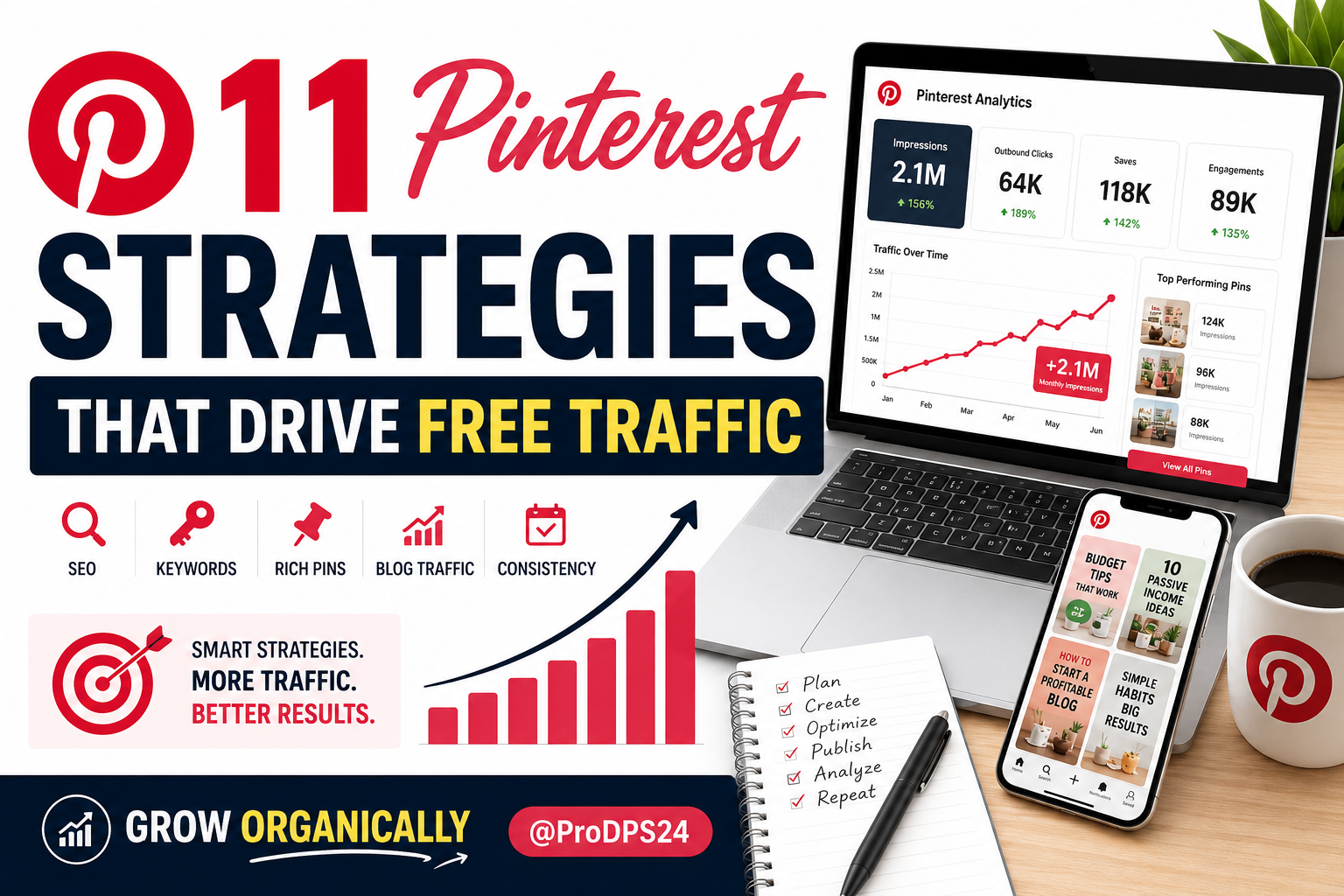
11 Pinterest Strategies That Drive Free Traffic
Pinterest is much more than a platform for collecting inspiration. It has become one of the most effective visual search engines for bloggers, content creators, affiliate marketers, eCommerce stores, and small businesses. Unlike many social media platforms where posts disappear within hours, Pinterest pins can continue driving traffic for months or even years.
If your goal is to grow your website without relying on paid advertising, Pinterest offers one of the best long-term opportunities. By combining high-quality content with smart optimization, you can build a steady stream of visitors that grows over time.
This guide explains eleven practical Pinterest strategies that can help you increase your organic reach and attract more visitors to your website.
Why Pinterest Is Different
Pinterest functions as a search engine rather than a traditional social media platform. Users actively search for ideas, tutorials, shopping recommendations, and solutions to problems.
That means your content can continue appearing in search results long after it is published.
Benefits of Pinterest Marketing
- Long-lasting content lifespan
- Consistent organic website traffic
- High purchase intent audience
- Excellent platform for bloggers
- Strong support for affiliate marketing
- Free business marketing opportunities
1. Optimize Your Pinterest Profile
Your profile creates the first impression for both Pinterest users and the search algorithm.
A professional profile should include:
- Clear profile photo
- Keyword-rich bio
- Business website
- Relevant board titles
- Organized board covers
A complete profile helps Pinterest understand your niche and improves discoverability.
2. Research the Right Keywords
Pinterest SEO begins with keyword research.
Look for phrases your audience actually searches for.
Examples include:
- Pinterest marketing
- Budget planner
- Passive income ideas
- AI productivity
- Home organization
- Blogging tips
Use these keywords naturally in:
- Pin titles
- Pin descriptions
- Board names
- Profile description
- Image file names
3. Design Click-Worthy Pins
Visual quality strongly influences click-through rates.
Effective pins usually include:
- Large readable headline
- Bright, clean colors
- Easy-to-read fonts
- High-quality images
- Strong contrast
- Simple layout
Your design should immediately communicate what the user will learn after clicking.
4. Write SEO-Friendly Pin Titles
The title is one of the strongest ranking signals.
Instead of writing:
“Money Tips”
Write:
“15 Simple Money Habits That Help You Save More Every Month”
Specific titles attract more searches and more clicks.
5. Create Helpful Pin Descriptions
Descriptions provide context for Pinterest’s search algorithm.
Include:
- Primary keyword
- Secondary keywords
- Short summary
- Clear call-to-action
Example:
Discover simple Pinterest SEO techniques that help bloggers increase organic traffic, improve visibility, and grow their audience without spending money on ads.
6. Enable Rich Pins
Rich Pins automatically display extra information from your website.
Benefits include:
- More credibility
- Better user experience
- Improved click rates
- Automatic content updates
Rich Pins are especially useful for blog posts, recipes, and products.
7. Publish Fresh Content Consistently
Pinterest rewards creators who publish regularly.
You do not need dozens of pins every day.
Instead:
- Create fresh pin designs
- Publish consistently
- Update older content
- Add new blog posts regularly
Consistency often performs better than volume.
8. Link Every Pin to Valuable Content
Every pin should solve a problem.
Link users to:
- Blog posts
- Tutorials
- Guides
- Product pages
- Resource libraries
Avoid linking to pages with little or no useful information.
The better your destination page, the longer visitors stay on your website.
9. Create Multiple Pin Designs
One blog post can support several different pin designs.
Try variations using:
- Different headlines
- Different images
- Different colors
- Different layouts
- Different calls-to-action
This increases your chances of reaching different audiences.
10. Analyze Your Pinterest Analytics
Data helps you understand what works.
Monitor metrics such as:
- Impressions
- Saves
- Outbound clicks
- Engagement rate
- Top-performing pins
Focus future content on the topics and styles generating the best results.
11. Stay Consistent
Pinterest success rarely happens overnight.
Many successful creators experience gradual growth over several months.
Publishing valuable content every week builds momentum and creates a growing library of searchable pins.
Small improvements made consistently often outperform occasional bursts of activity.
Pinterest Growth Checklist
| Strategy | Importance | Frequency |
|---|---|---|
| Optimize Profile | High | Once, then update quarterly |
| Keyword Research | High | Weekly |
| Design New Pins | High | Weekly |
| SEO Titles | High | Every Pin |
| SEO Descriptions | High | Every Pin |
| Rich Pins | Medium | One-Time Setup |
| Publish Fresh Pins | High | Weekly |
| Link to Quality Content | High | Every Pin |
| Multiple Pin Designs | High | Every Blog Post |
| Review Analytics | Medium | Monthly |
| Stay Consistent | Very High | Ongoing |
Sample Weekly Pinterest Workflow
| Day | Task |
|---|---|
| Monday | Keyword Research |
| Tuesday | Write Blog Post |
| Wednesday | Design 3–5 Pins |
| Thursday | Publish Pins |
| Friday | Share Existing Content |
| Saturday | Review Analytics |
| Sunday | Plan Next Week’s Content |
Common Pinterest Mistakes to Avoid
- Using low-quality images
- Ignoring keyword research
- Writing vague titles
- Publishing inconsistently
- Linking to poor-quality pages
- Creating only one pin per blog post
- Forgetting to review analytics
- Expecting immediate results
Avoiding these mistakes can significantly improve your long-term growth.
Final Thoughts
Pinterest is one of the few platforms where great content can continue generating traffic long after it is published. By combining keyword research, attractive pin designs, SEO optimization, Rich Pins, and consistent publishing, you can build a reliable source of organic visitors without paying for advertising.
Focus on creating valuable content that answers real questions, optimize every pin for search, and remain consistent with your publishing schedule. Over time, each optimized pin becomes another opportunity to attract readers, grow your audience, and increase your website traffic.
The best Pinterest strategy is not chasing quick wins—it’s creating helpful content that continues working for you month after month. Start implementing these eleven strategies today, and you’ll be well on your way to building sustainable, long-term organic traffic.
---Advertisement---
[adinserter block="1"]
LATEST post
Swagbucks & InboxDollars $20 Bonus Method – Earning Guide
August 20, 2026
7:59 am

TextNow Account Create Method – Complete Guide for Beginners
August 19, 2026
10:43 pm

SMM Panel কী? Social Media Services ও Marketing Guide 2026
August 18, 2026
9:59 pm

Amazon mTurk Account + Fresh USA VPS Package | ProDPS
August 17, 2026
7:40 am

USA Survey VPS – Best USA VPS for Online Surveys Max Router Supported | ProDPS
August 17, 2026
6:38 am