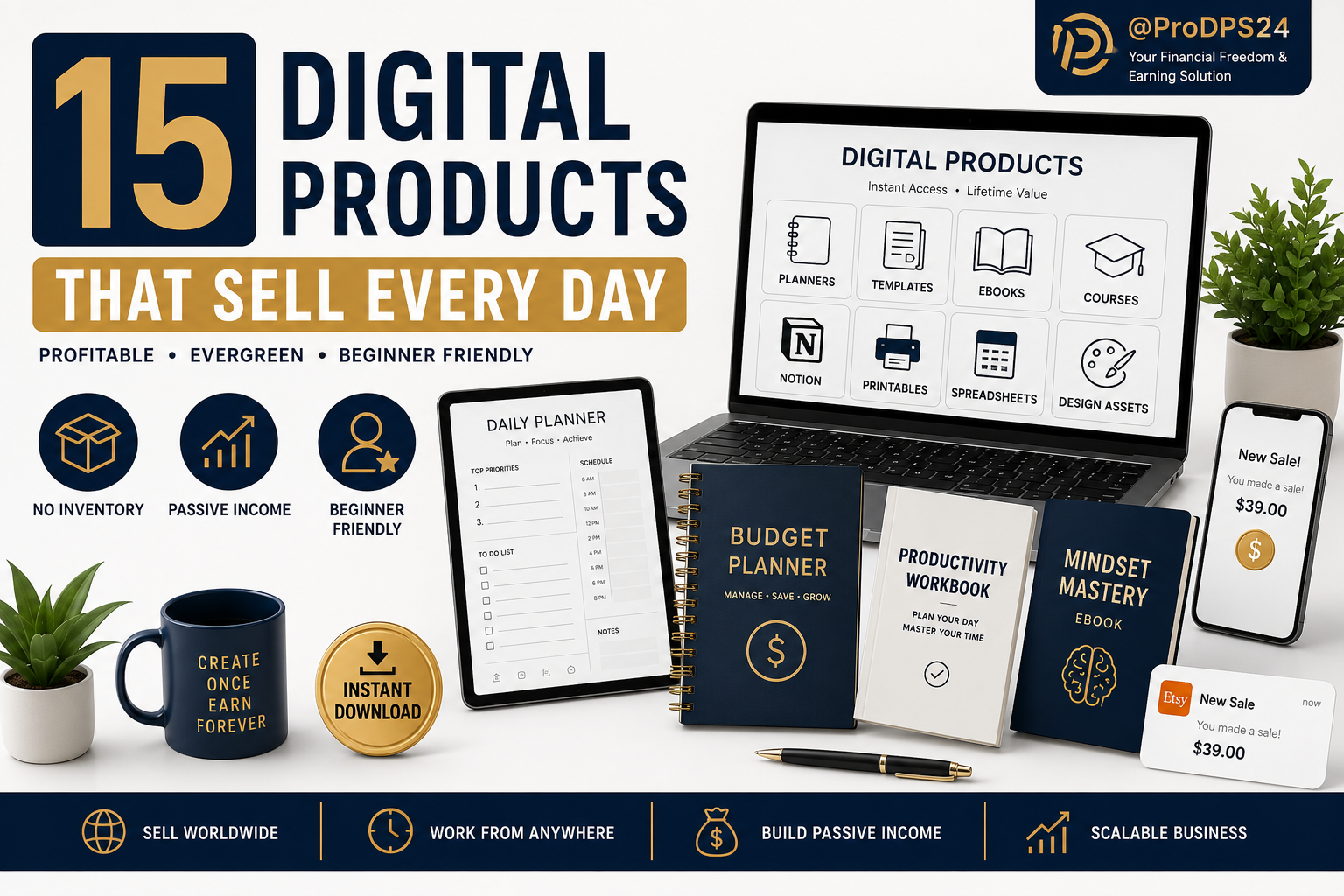
Imagine creating a product once and selling it hundreds—or even thousands—of times without worrying about inventory, shipping, or manufacturing. That’s the power of digital products.
Over the past decade, the digital economy has grown rapidly as more people shop, learn, and work online. Consumers now expect instant access to ebooks, templates, planners, online courses, design assets, and productivity tools. This shift has created incredible opportunities for creators, freelancers, entrepreneurs, and beginners who want to build an online income with relatively low startup costs.
Unlike physical products, digital products can be downloaded immediately after purchase. Once created, they can be sold repeatedly with little additional effort, making them one of the most scalable business models available today. Whether you’re a graphic designer, writer, educator, photographer, or someone with valuable knowledge to share, there’s likely a digital product you can create and sell.
Another major advantage is flexibility. You don’t need a warehouse, packaging supplies, or a shipping partner. Many successful digital product businesses begin with a laptop, a few affordable software tools, and a clear understanding of what customers need. Modern platforms such as Etsy, Gumroad, Shopify, and WooCommerce have made it easier than ever to reach buyers around the world.
Artificial intelligence and user-friendly design tools have also lowered the barrier to entry. Beginners can now create professional-looking templates, planners, workbooks, presentations, and marketing resources more efficiently than ever before. While technology can speed up the creation process, long-term success still depends on providing genuine value and solving real problems for customers.
This guide explores 15 digital products that consistently sell every day, why people buy them, and how you can turn your skills, creativity, or expertise into products that generate recurring income. Whether your goal is to build a side hustle, diversify your business, or create a full-time online brand, these ideas can help you get started with confidence.
Why Digital Products Continue to Grow in Popularity
The demand for digital products isn’t just a temporary trend. Several long-term changes have reshaped how people buy and consume information.
Instant Access
Today’s customers value convenience. Instead of waiting days for a package to arrive, they can purchase and download a product in seconds. This instant delivery improves customer satisfaction and makes digital products attractive for both buyers and sellers.
Remote Work and Online Learning
As remote work and online education continue to expand, individuals and businesses rely more heavily on digital resources such as templates, planners, productivity systems, online courses, and downloadable guides. These tools help users save time, stay organized, and improve their skills.
Low Startup Costs
Starting a traditional retail business often requires significant investment in inventory, storage, and logistics. In contrast, many digital products can be created using affordable software and sold through existing online marketplaces or your own website.
Global Customer Reach
A digital storefront isn’t limited by geography. Your products can be purchased by customers from different countries, allowing your business to grow without opening physical locations.
Automation Opportunities
Payment processing, file delivery, email marketing, and customer communication can all be automated. This means you spend less time handling routine tasks and more time creating valuable products or improving your marketing.
What Makes Digital Products So Profitable?
Digital products offer a unique combination of scalability and efficiency.
| Advantage | Why It Matters |
|---|---|
| No Inventory | You don’t need to purchase or store physical stock. |
| No Shipping | Customers receive downloads instantly. |
| High Profit Margins | Most revenue comes after creation costs are recovered. |
| Unlimited Sales Potential | The same product can be sold repeatedly. |
| Easy Updates | Files can be improved without replacing physical inventory. |
| Worldwide Sales | Reach customers across different countries and time zones. |
Although creating a high-quality product requires time and effort, each additional sale typically costs very little. This allows successful creators to increase their earnings without significantly increasing operating expenses.
Benefits of Selling Digital Products
Selling digital products provides advantages beyond earning passive income.
Flexible Working Hours
You can build your business around your existing schedule. Whether you’re a student, employee, freelancer, or stay-at-home parent, digital products allow you to work at your own pace.
Creative Freedom
Digital products can reflect your expertise, interests, and creativity. From educational resources to design templates, there are opportunities in nearly every niche.
Easy Product Expansion
Once customers trust your work, you can introduce complementary products, bundles, subscriptions, or premium resources that increase your average order value.
Business Scalability
Unlike service-based businesses, digital products don’t require you to trade hours for income. As your audience grows, your earning potential can grow as well.
Long-Term Asset Creation
A well-designed digital product may continue generating sales months or even years after publication, especially when supported by strong SEO, Pinterest marketing, and email campaigns.
Who Should Start a Digital Product Business?
One of the best aspects of digital products is that almost anyone can get started.
You may benefit from selling digital products if you are:
- A beginner looking for a side income.
- A freelancer wanting additional revenue streams.
- A teacher or coach creating educational resources.
- A designer selling templates or graphics.
- A photographer offering presets or stock images.
- A writer publishing ebooks or guides.
- A business owner creating downloadable resources.
- A content creator monetizing an audience.
- A student developing practical study materials.
- A professional sharing industry knowledge.
You don’t need to be an expert in every area. Success often comes from understanding a specific audience and creating products that solve their everyday problems.
How to Choose the Right Digital Product
Choosing the right product is one of the most important decisions you’ll make.
Consider the following questions before creating your first digital product:
- What problems can I help people solve?
- What skills or knowledge do I already have?
- What products are customers actively searching for?
- Can I create something better, simpler, or more useful?
- Will this product remain valuable over time?
- Can I expand it into a larger collection later?
A successful digital product usually combines three key elements:
- Market Demand – People are actively searching for the solution.
- Useful Content – The product genuinely helps customers achieve a goal.
- Professional Presentation – Clear design, easy navigation, and high-quality formatting build trust.
Instead of trying to create dozens of products immediately, focus on producing one excellent resource. Collect customer feedback, make improvements, and expand your catalog gradually.
1. Digital Planners
Digital planners remain one of the highest-selling digital products because they help people organize nearly every aspect of their lives. Students, professionals, entrepreneurs, parents, and fitness enthusiasts all look for planners that simplify daily routines.
Unlike traditional paper planners, digital planners can be used on tablets, smartphones, and computers. Many buyers prefer interactive PDF planners that work with note-taking apps or printable versions they can use at home.
Why They Sell Every Day
- High demand year-round
- Suitable for many niches
- Easy to update
- Customers often purchase multiple planner styles
- Great for repeat business
Popular Types of Digital Planners
- Daily Planner
- Weekly Planner
- Monthly Planner
- Goal Planner
- Budget Planner
- Meal Planner
- Fitness Planner
- Student Planner
- Business Planner
- Wedding Planner
- Travel Planner
- Pregnancy Planner
- Self-Care Planner
Tools to Create Digital Planners
- Canva
- Adobe InDesign
- Microsoft PowerPoint
- Google Slides
- Affinity Publisher
Where to Sell
- Your WooCommerce store (ProDPS.com)
- Etsy
- Gumroad
- Shopify
- Creative Market
Pricing
Basic planners typically range from $5–$15, while premium planner bundles can sell for $20–$50 or more.
Pro Tip
Create themed planner bundles, such as a complete productivity pack that includes daily, weekly, monthly, and yearly planners. Bundles often increase average order value and appeal to customers looking for all-in-one solutions.
2. Printable Templates
Printable templates are among the easiest digital products to create and sell. Customers appreciate templates because they save time and provide ready-made solutions.
These products appeal to individuals, families, teachers, and small businesses alike.
Popular Printable Ideas
- Grocery Lists
- Chore Charts
- Habit Trackers
- Calendars
- Budget Worksheets
- Savings Challenges
- Wedding Checklists
- Party Invitations
- Classroom Worksheets
- Kids’ Activity Sheets
- Vision Boards
- Cleaning Schedules
Why Customers Love Printables
People don’t want to design everything from scratch. A professionally designed printable helps them stay organized, save time, and achieve their goals more efficiently.
Design Tips
- Use clean layouts.
- Leave enough writing space.
- Choose readable fonts.
- Include editable versions when possible.
- Offer PDF and PNG formats.
Pricing
Most printable templates sell between $2–$10, while large bundles can command significantly higher prices.
Marketing Tip
Pinterest is especially effective for promoting printable templates because users actively search for organization, budgeting, and productivity ideas.
3. Canva Templates
Canva has become one of the most popular design platforms for entrepreneurs, influencers, bloggers, and small business owners. As a result, professionally designed Canva templates continue to generate strong demand.
Rather than designing graphics from scratch, customers purchase templates they can customize within minutes.
Best-Selling Canva Templates
- Instagram Posts
- Instagram Stories
- Pinterest Pins
- Facebook Posts
- YouTube Thumbnails
- Presentation Slides
- Resume Templates
- Business Cards
- Media Kits
- Ebooks
- Lead Magnets
- Workbooks
- Flyers
- Restaurant Menus
- Price Lists
Why They Sell So Well
Businesses need fresh content regularly, and Canva templates help them create professional designs quickly without hiring a designer.
Creation Tips
- Use modern fonts.
- Maintain consistent branding.
- Organize colors and elements.
- Keep layouts easy to edit.
- Include clear instructions for buyers.
Selling Platforms
- ProDPS.com
- Etsy
- Creative Market
- Gumroad
- Payhip
Pricing
Individual template packs often sell for $8–$25, while comprehensive business branding kits can sell for $50–$150.
Extra Revenue Idea
Offer template bundles for specific industries, such as real estate, fitness coaches, restaurants, or online educators.
4. eBooks
eBooks continue to be one of the most trusted ways to share knowledge and generate passive income. If you have expertise or practical experience in a particular topic, an eBook can become a valuable digital asset.
Popular eBook Niches
- Personal Finance
- Investing Basics
- Budgeting
- Digital Marketing
- Social Media
- AI Productivity
- Freelancing
- Health and Wellness
- Self-Improvement
- Cooking
- Photography
- Language Learning
- Parenting
- Business Startups
Why eBooks Continue to Sell
Readers seek practical guidance that helps them solve problems, learn new skills, or achieve specific goals. Well-written eBooks can establish your authority while generating consistent sales.
Writing Tips
- Focus on solving one main problem.
- Use simple language.
- Include examples and illustrations.
- Add checklists and worksheets.
- Update the content periodically.
Pricing
Short guides often range from $5–$15, while comprehensive eBooks can sell for $20–$50 or more, depending on the niche and depth of content.
Bonus Strategy
Convert your blog posts into a premium eBook by expanding the content, adding exclusive chapters, and including downloadable resources.
5. Notion Dashboards & Templates
Notion has become a favorite productivity tool for students, entrepreneurs, freelancers, and businesses. As more people use it to organize projects and workflows, demand for high-quality Notion templates continues to grow.
Best-Selling Notion Templates
- Daily Planner
- Habit Tracker
- Student Dashboard
- Finance Tracker
- Content Calendar
- Project Manager
- CRM System
- Business Dashboard
- Goal Tracker
- Reading List
- Meal Planner
- Client Portal
- Job Application Tracker
- Travel Planner
- Team Workspace
Why They’re Popular
Many users want the benefits of Notion without spending hours building systems from scratch. Ready-made dashboards offer immediate value and can save significant time.
Design Best Practices
- Keep navigation simple.
- Use intuitive layouts.
- Include instructions for first-time users.
- Make templates customizable.
- Test functionality before selling.
Pricing
Simple templates often sell for $10–$25, while advanced business systems and productivity dashboards can sell for $50–$150 or more.
Growth Tip
Package several related templates into a productivity bundle. For example, combine a daily planner, content calendar, finance tracker, and goal dashboard into a single premium offer.
Why Bundles Increase Revenue
Instead of selling products individually, consider creating bundles that combine complementary items. Customers often perceive bundles as better value, and they can significantly increase your average order value.
Example Bundle: Productivity Starter Pack
- Digital Planner
- Budget Tracker
- Habit Tracker
- Weekly Calendar
- Goal Planner
- Notion Dashboard
- Canva Social Media Templates
Selling this as one package can generate more revenue than selling each product separately.
Now that we’ve covered the first five digital products, let’s explore ten more profitable ideas. These products appeal to different audiences and can help you build multiple income streams. The more diverse your digital product catalog, the greater your opportunities for recurring sales.
6. Online Courses
Online learning continues to grow as people invest in new skills for their careers, businesses, and hobbies. If you have expertise in a subject, creating an online course can become one of your most valuable digital assets.
Unlike one-on-one coaching, a course can be sold repeatedly without requiring your constant involvement.
Popular Course Topics
- Graphic Design
- Digital Marketing
- AI Tools
- Personal Finance
- Photography
- Video Editing
- Coding
- Language Learning
- Freelancing
- Social Media Marketing
- Productivity Systems
- Business Management
Why Online Courses Sell
People are willing to pay for structured learning that helps them reach a goal faster. A clear curriculum with practical lessons provides more value than scattered free resources.
Best Platforms
- Your own website (ProDPS.com)
- Teachable
- Thinkific
- Gumroad
- Podia
Pricing
- Mini Course: $15–$50
- Standard Course: $75–$300
- Premium Course: $500+
Pro Tip
Include downloadable worksheets, templates, and checklists to increase the perceived value of your course.
7. Website Templates
Many small business owners and freelancers need professional websites but don’t have the time or design skills to build one from scratch.
Website templates provide a ready-made foundation that customers can customize for their own brands.
Popular Website Templates
- Portfolio Websites
- Agency Websites
- Restaurant Websites
- Business Landing Pages
- Personal Blogs
- Online Store Layouts
- Photography Websites
- Coaching Websites
- SaaS Landing Pages
- Coming Soon Pages
Why They Sell
Professional web design can be expensive. Templates offer an affordable alternative for individuals and businesses looking to launch quickly.
Pricing
Website templates typically sell between $25–$200, depending on complexity and features.
8. Resume and Career Templates
Job seekers want resumes that look polished and stand out to employers. Professionally designed resume templates save time and help applicants present themselves effectively.
Best-Selling Career Products
- Resume Templates
- CV Templates
- Cover Letter Templates
- Portfolio Templates
- Interview Preparation Guides
- Job Search Planners
- LinkedIn Profile Guides
Why They Sell
People frequently change jobs or enter the workforce, creating consistent demand for career resources.
Pricing
Most resume template packs sell for $5–$25, while complete career bundles can command higher prices.
9. Spreadsheet Templates
Businesses, entrepreneurs, and individuals rely on spreadsheets for planning, budgeting, and analysis. Well-designed spreadsheet templates help users organize data without building formulas themselves.
Popular Spreadsheet Ideas
- Budget Planner
- Savings Tracker
- Expense Tracker
- Invoice Generator
- Business Dashboard
- Sales Tracker
- Inventory Manager
- Debt Payoff Calculator
- Investment Tracker
- Profit & Loss Sheet
Why They Sell
Many users understand basic spreadsheets but prefer professionally built templates that save time and reduce errors.
Pricing
Spreadsheet templates generally range from $8–$40, with advanced business systems selling for more.
10. Stock Photos
High-quality stock photography remains valuable for bloggers, marketers, designers, and business owners who need professional visuals.
If you’re skilled in photography, selling royalty-free image collections can generate ongoing income.
Popular Categories
- Business
- Technology
- Lifestyle
- Food
- Nature
- Travel
- Workspace
- Healthcare
- Education
- Social Media
Selling Platforms
- Your own website
- Adobe Stock
- Shutterstock
- Creative Market
Pricing
Individual collections often sell for $10–$50, while extended commercial licenses may command higher prices.
11. Lightroom Presets
Photography enthusiasts and content creators often use Lightroom presets to edit images quickly while maintaining a consistent visual style.
Popular Preset Collections
- Travel
- Wedding
- Portrait
- Landscape
- Lifestyle
- Minimal
- Moody
- Bright & Airy
- Food Photography
- Instagram Themes
Why They Sell
Presets save editing time and help creators achieve professional-looking results with just a few clicks.
Pricing
Preset packs typically sell for $10–$60.
12. Digital Art and Wall Prints
Printable wall art has become increasingly popular because customers can purchase, download, and print artwork that matches their home or office decor.
Popular Styles
- Minimalist Quotes
- Abstract Art
- Botanical Prints
- Nursery Decor
- Modern Typography
- Watercolor Art
- Inspirational Posters
- Seasonal Decorations
- Vintage Designs
- Office Decor
Why It Sells
People enjoy affordable home decoration that can be customized with different frame sizes and printing options.
Pricing
Digital art files commonly sell between $5–$30, while curated bundles can generate higher revenue.
13. Fonts and Design Assets
Graphic designers, marketers, and content creators regularly purchase fonts, icons, illustrations, and design elements to improve their creative projects.
Popular Design Assets
- Fonts
- Icons
- SVG Files
- Logo Kits
- Illustrations
- UI Kits
- Mockups
- Branding Elements
- Pattern Collections
- Sticker Packs
Why They Sell
Creative professionals constantly look for fresh design resources that help them complete projects faster.
Pricing
Design assets often sell for $5–$75, depending on complexity and licensing.
14. Music, Sound Effects, and Audio Files
Video creators, podcasters, game developers, and advertisers need royalty-free audio for their projects.
If you produce music or sound effects, this niche offers recurring demand.
Popular Audio Products
- Background Music
- Podcast Intros
- Notification Sounds
- Cinematic Music
- Meditation Audio
- Nature Sounds
- Gaming Effects
- Transition Effects
- Loops
- Instrumental Tracks
Pricing
Audio products typically range from $10–$100, depending on usage rights.
15. AI Prompt Packs
Artificial intelligence has created a rapidly growing market for well-organized prompt collections. Businesses, marketers, writers, and students often purchase prompt packs to improve productivity and generate ideas more efficiently.
Popular Prompt Categories
- Content Writing
- Blog Writing
- Social Media
- Email Marketing
- SEO
- Business Planning
- Resume Writing
- Coding Assistance
- Productivity
- Image Generation
- Customer Support
- Education
Why AI Prompt Packs Sell
Many people use AI tools but struggle to write effective prompts. Curated prompt packs save time and produce better results, making them valuable resources for beginners and professionals alike.
Pricing
Prompt collections usually sell for $10–$75, while comprehensive business bundles can command premium prices.
Comparison Table: 15 Digital Products at a Glance
| Digital Product | Beginner Friendly | Startup Cost | Passive Income Potential |
|---|---|---|---|
| Digital Planners | ⭐⭐⭐⭐⭐ | Low | High |
| Printable Templates | ⭐⭐⭐⭐⭐ | Low | High |
| Canva Templates | ⭐⭐⭐⭐⭐ | Low | High |
| eBooks | ⭐⭐⭐⭐☆ | Low | High |
| Notion Templates | ⭐⭐⭐⭐☆ | Low | High |
| Online Courses | ⭐⭐⭐☆☆ | Medium | Very High |
| Website Templates | ⭐⭐⭐☆☆ | Medium | High |
| Resume Templates | ⭐⭐⭐⭐⭐ | Low | Medium |
| Spreadsheet Templates | ⭐⭐⭐⭐☆ | Low | High |
| Stock Photos | ⭐⭐⭐☆☆ | Medium | Medium |
| Lightroom Presets | ⭐⭐⭐☆☆ | Low | Medium |
| Digital Art | ⭐⭐⭐⭐☆ | Low | High |
| Fonts & Design Assets | ⭐⭐⭐☆☆ | Medium | High |
| Audio Files | ⭐⭐☆☆☆ | Medium | Medium |
| AI Prompt Packs | ⭐⭐⭐⭐⭐ | Low | Very High |
Which Digital Product Should You Start With?
If you’re just beginning, focus on products that are simple to create, affordable to produce, and in consistent demand. Great starter options include:
- Printable planners
- Budget worksheets
- Canva templates
- Resume templates
- Notion dashboards
- AI prompt packs
As you gain experience, you can expand into higher-value offerings like online courses, premium template bundles, and comprehensive business resources.
How to Sell Digital Products Successfully and Build Passive Income
Creating a great digital product is only the beginning. To generate consistent sales, you need a strategy for pricing, marketing, and building trust with your audience. In this section, you’ll learn how to launch your products, attract customers, and grow a sustainable digital product business.
Choose the Right Platform to Sell Your Digital Products
Where you sell your products can have a major impact on your sales and long-term growth. Many successful creators use multiple platforms to reach different audiences.
| Platform | Best For | Pros | Cons |
|---|---|---|---|
| ProDPS.com (WooCommerce) | Building your own brand | Full control, no marketplace competition, higher profit margins | Requires your own marketing |
| Etsy | Printables, planners, templates | Large built-in audience | Marketplace fees and strong competition |
| Gumroad | eBooks, AI prompts, templates | Easy setup and instant delivery | Limited customization |
| Shopify | Growing brands | Professional online store with many apps | Monthly subscription cost |
| Creative Market | Design assets | Targeted audience of designers | Approval required for sellers |
Price Your Digital Products Strategically
Pricing isn’t just about covering costs—it also reflects the value of your product. Customers often associate higher-quality resources with higher prices.
Factors That Influence Pricing
- Time invested in creating the product
- Depth and usefulness of the content
- Design quality
- Market demand
- Number of files included
- Commercial or personal use license
Sample Pricing Guide
| Product | Suggested Price |
|---|---|
| Printable | $3–$8 |
| Canva Template | $8–$25 |
| Digital Planner | $10–$30 |
| Resume Template | $8–$20 |
| Spreadsheet | $10–$40 |
| AI Prompt Pack | $15–$50 |
| eBook | $15–$40 |
| Website Template | $30–$150 |
| Online Course | $50–$300+ |
Pricing Tips
- Research similar products before setting your price.
- Avoid pricing too low, as it may reduce perceived value.
- Offer occasional promotions instead of permanent discounts.
- Create premium bundles to increase average order value.
Build a Strong Brand
Customers are more likely to buy from a recognizable and trustworthy brand.
Elements of a Professional Brand
- Consistent logo
- Clean website design
- Matching color palette
- Professional product images
- Helpful blog content
- Clear product descriptions
- Responsive customer support
For ProDPS.com, maintain consistent branding across your website, Pinterest account, and social media profiles. This helps build recognition and trust over time.
Optimize Product Pages for SEO
Each product page should be optimized so search engines can understand and rank your content.
Include:
- Keyword-rich product title
- Compelling product description
- Benefits and features
- High-quality preview images
- Alt text for every image
- Customer FAQs
- Clear pricing
- Instant download information
- Customer testimonials (when available)
Product Description Formula
- Explain the problem.
- Show how the product solves it.
- Highlight key features.
- Describe who it’s for.
- Include what’s included.
- End with a clear call-to-action.
Drive Traffic with Pinterest
Pinterest is one of the best long-term traffic sources for digital products because users actively search for ideas, inspiration, and solutions.
Best Practices
- Design vertical pins (1000 × 1500 pixels).
- Use bold, readable headlines.
- Include your brand name (e.g., @ProDPS24).
- Write keyword-rich pin titles and descriptions.
- Link each pin to a relevant blog post or product page.
- Create multiple pin designs for the same article.
Content Ideas
- “15 Digital Products That Sell Every Day”
- “Best Canva Templates for Small Businesses”
- “Beginner’s Guide to Passive Income”
- “How to Start Selling Printables”
Aim to publish fresh, high-quality pins consistently to increase your reach over time.
Use Content Marketing to Attract Buyers
Helpful blog content can bring visitors from search engines and establish your expertise.
Blog Ideas
- How to Create Digital Planners
- Best Canva Template Ideas
- Beginner’s Guide to Selling Printables
- Passive Income Strategies
- AI Tools for Digital Creators
- How to Price Digital Products
At the end of each article, recommend related products available on ProDPS.com to encourage conversions.
Grow an Email List
An email list allows you to connect directly with your audience without relying on social media algorithms.
Ways to Collect Subscribers
- Free printable downloads
- Mini eBooks
- Exclusive templates
- Discount coupons
- Weekly productivity tips
- Email courses
Email Sequence Example
Email 1: Welcome and free download.
Email 2: Helpful tips related to the free resource.
Email 3: Recommend a relevant paid product.
Email 4: Share customer success stories.
Email 5: Offer a limited-time bundle or discount.
Promote on Multiple Platforms
Don’t rely on a single traffic source. Share your content across different channels to reach a wider audience.
Recommended Platforms
- X (Twitter)
- YouTube
- Medium
- Reddit (where appropriate)
- Email newsletters
Repurpose your blog content into social posts, infographics, videos, and carousels to maximize its reach.
Deliver Excellent Customer Experience
Happy customers are more likely to leave positive reviews and recommend your products.
Best Practices
- Offer clear download instructions.
- Respond to customer questions promptly.
- Update products when needed.
- Fix reported issues quickly.
- Provide accurate product descriptions.
- Include a simple FAQ section.
Building trust leads to repeat purchases and long-term business growth.
Scale Your Business
Once your first products begin generating sales, focus on expanding your catalog strategically.
Growth Ideas
- Create complementary products.
- Bundle related items.
- Launch seasonal collections.
- Introduce premium versions.
- Offer commercial licenses.
- Develop online courses.
- Build a membership library.
- Collaborate with other creators.
Rather than chasing every trend, continue creating evergreen products that solve real problems.
Passive Income Doesn’t Mean “No Work”
Digital products can generate income while you sleep, but they still require planning, creativity, and ongoing improvement.
Successful creators regularly:
- Update older products.
- Improve product images.
- Optimize SEO.
- Publish fresh blog posts.
- Design new Pinterest pins.
- Test pricing strategies.
- Analyze customer feedback.
- Expand into related niches.
Consistent effort compounds over time, helping your business grow steadily.
Preparing for Long-Term Success
The digital product market continues to evolve, but one principle remains constant: products that provide genuine value are the ones most likely to succeed.
Focus on:
- Solving real customer problems.
- Creating high-quality resources.
- Building trust through helpful content.
- Optimizing your website for search engines.
- Using Pinterest and other visual platforms to attract targeted visitors.
- Continuously learning and improving.
By following these practices, you’ll be well-positioned to build a digital product business that generates sustainable, long-term income.
Practical Tips for Selling Digital Products Successfully
Starting a digital product business doesn’t require a huge budget, but it does require consistency and a customer-focused approach. These practical tips can help you build momentum and improve your chances of long-term success.
1. Solve One Specific Problem
The best-selling digital products are designed to solve a clear problem. Instead of creating a general planner, consider making a Student Exam Planner, Small Business Budget Tracker, or Wedding Planning Checklist.
2. Focus on Quality Over Quantity
One outstanding digital product can outperform dozens of average ones. Spend time refining your design, proofreading your content, and ensuring everything works as expected.
3. Create Product Bundles
Bundling related products increases the perceived value for customers and often leads to higher average order values.
Example Bundle:
- Digital Planner
- Budget Tracker
- Habit Tracker
- Goal Planner
- Printable Calendar
4. Use Professional Mockups
Present your products with attractive mockups so customers can easily visualize what they’re buying. High-quality visuals improve trust and conversion rates.
5. Optimize Every Product for SEO
Include your focus keyword naturally in the:
- Product title
- URL
- Meta description
- Product description
- Image alt text
- Headings
This helps search engines understand your content and improves discoverability.
6. Build an Email List Early
Offer a free printable, checklist, or template in exchange for an email address. This allows you to stay connected with potential customers and promote future products.
7. Analyze Your Results
Use tools like Google Analytics and Google Search Console to monitor traffic, identify popular content, and improve underperforming pages.
Common Mistakes to Avoid
Many beginners make avoidable mistakes that slow their progress. Being aware of these issues can save time and improve your results.
Creating Products Without Research
Always validate demand before investing time in creating a product. Search marketplaces, forums, and keyword tools to understand what customers are looking for.
Ignoring Product Presentation
Even an excellent product may struggle to sell if the images, title, or description look unprofessional.
Competing Only on Price
Avoid trying to be the cheapest seller. Instead, focus on offering more value through quality, support, and thoughtful design.
Publishing Without Marketing
Simply uploading a product isn’t enough. Promote it through blog posts, Pinterest, social media, and email marketing.
Neglecting Updates
Refresh your products periodically to keep them relevant and improve customer satisfaction.
Inconsistent Branding
Maintain consistent colors, fonts, logos, and messaging across your website, Pinterest pins, and social profiles to build recognition.
Frequently Asked Questions (FAQs)
1. What is a digital product?
A digital product is a downloadable or online resource that customers can purchase and access electronically. Examples include eBooks, templates, planners, online courses, spreadsheets, and design assets.
2. Can beginners sell digital products?
Yes. Many successful creators started with little or no experience. Focus on solving a specific problem, creating a high-quality product, and learning basic marketing skills.
3. Do I need inventory?
No. Digital products are delivered electronically, so there’s no need for physical inventory, packaging, or shipping.
4. Where should I sell digital products?
You can sell through your own WooCommerce store, Etsy, Gumroad, Shopify, or other digital marketplaces. Owning your own website gives you greater control over branding and customer relationships.
5. How much does it cost to start?
The startup cost can be relatively low. Many creators begin with affordable design software, a website, and a payment gateway.
6. Which digital product is easiest to create?
Printable templates, planners, checklists, Canva templates, and AI prompt packs are often beginner-friendly because they require minimal technical skills.
7. Can digital products generate passive income?
Yes, but they still require effort to create, market, and update. Once established, they can generate recurring income with relatively low ongoing costs.
8. How do I attract customers?
Combine SEO, Pinterest marketing, blogging, email marketing, and social media promotion. Consistently publishing helpful content can attract targeted visitors over time.
9. Should I create many products at once?
It’s usually better to start with one or two excellent products, gather feedback, and improve them before expanding your catalog.
10. How can I increase sales?
Improve your product pages, create bundles, publish helpful blog content, use attractive product images, and encourage repeat purchases through email marketing.
Expert Tips
- Start with a niche you understand well.
- Research customer needs before creating products.
- Build an email list from the beginning.
- Publish SEO-optimized blog content regularly.
- Create multiple Pinterest pins for each blog post.
- Update older products instead of constantly starting from scratch.
- Use customer feedback to improve future releases.
- Focus on evergreen topics that remain valuable over time.
- Develop a recognizable brand identity.
- Measure performance and refine your strategy based on data.
Key Takeaways
- Digital products offer a scalable online business model with no physical inventory.
- Focus on solving real problems for a specific audience.
- High-quality products, strong branding, and helpful content build trust.
- Pinterest and SEO can generate long-term traffic.
- Product bundles often increase average order value.
- Continuous improvement and consistent marketing are essential for sustainable growth.
Final Conclusion
Digital products have opened the door for creators, entrepreneurs, and professionals to build businesses that aren’t limited by inventory or shipping. Whether you choose to sell planners, templates, eBooks, online courses, or AI prompt packs, the most successful products share one thing in common—they provide genuine value.
Building a profitable digital product business takes time, but each product you create becomes a long-term asset. As your catalog grows and your marketing improves, you’ll create more opportunities to reach customers around the world.
Success doesn’t come from chasing every trend. It comes from understanding your audience, solving meaningful problems, and consistently delivering quality. If you stay focused on those principles, your digital product business can continue growing for years to come.
Ready to start your digital product journey?
Explore more practical guides, digital business resources, and downloadable products on ProDPS.com. Whether you’re launching your first printable or expanding an established online store, investing in high-quality digital products and smart marketing strategies can help you build a stronger, more sustainable online business.
Save this guide, share it with other creators, and begin creating digital products that provide real value to customers every day.