
The Simple Financial Checklist for a Wealthier Future: Budget, Save & Invest Wisely
WhatsApp
Telegram
Facebook
Twitter
LinkedIn
Join Our WhatsApp Channel
Here’s a practical checklist you can use to improve your financial habits and work toward long-term financial security. Building wealth doesn’t require earning a massive income—it often comes down to making consistent, smart financial decisions over time. By following a few simple habits each month, you can create a stronger financial foundation and reduce money-related stress.
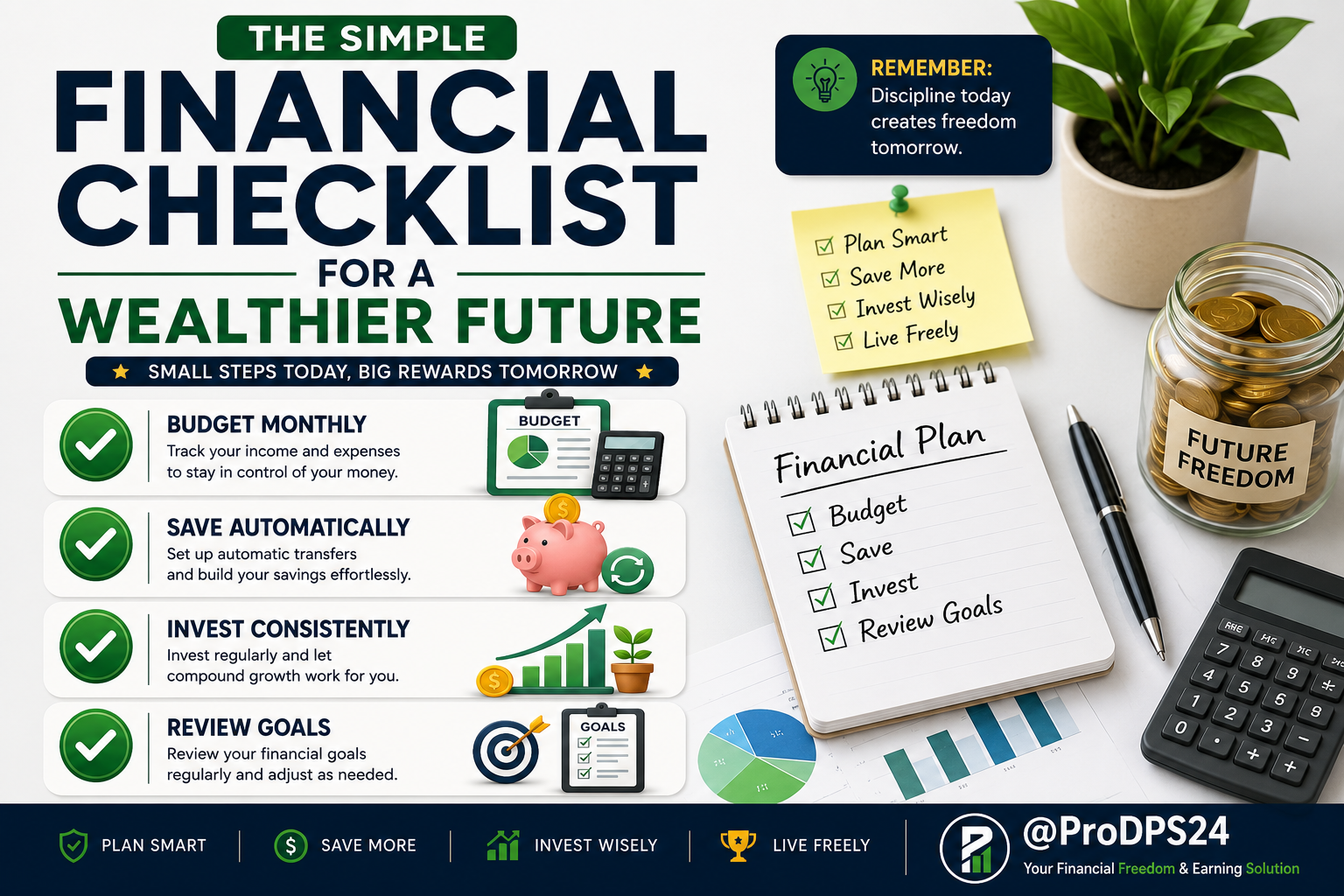
The Simple Financial Checklist for a Wealthier Future
Managing your money effectively is one of the most valuable life skills you can develop. Whether you’re paying off debt, saving for a home, preparing for retirement, or simply trying to gain better control of your finances, following a straightforward financial checklist can make a significant difference.
Instead of chasing quick wealth, focus on habits that help your money grow steadily over time.
Why a Financial Checklist Works
A checklist keeps your finances organized and ensures you don’t overlook important tasks. Just as businesses use checklists to stay efficient, individuals can use financial checklists to stay on track with their goals.
Benefits include:
- Better budgeting
- More consistent saving
- Smarter investing
- Clear financial direction
- Reduced financial stress
Your Monthly Financial Checklist
| Task | Why It Matters | Recommended Frequency |
|---|---|---|
| ✅ Budget Monthly | Know exactly where your money goes. | Every Month |
| ✅ Save Automatically | Build savings without relying on willpower. | Every Payday |
| ✅ Invest Consistently | Grow wealth through long-term investing. | Monthly |
| ✅ Review Financial Goals | Stay focused and adjust your plan when needed. | Monthly or Quarterly |
1. Budget Every Month
A budget is the foundation of financial success.
Before the month begins:
- Calculate your expected income.
- List fixed expenses like rent, utilities, and insurance.
- Estimate variable expenses such as groceries and entertainment.
- Allocate money toward savings and investments.
- Leave room for unexpected costs.
A realistic budget helps prevent overspending while ensuring every dollar has a purpose.
2. Save Automatically
One of the easiest ways to grow your savings is to automate the process.
Consider setting up automatic transfers to:
- Emergency fund
- High-yield savings account
- Vacation fund
- Home down payment fund
- Education savings
Even small automatic deposits can add up significantly over time.
Savings Growth Example
| Monthly Savings | 1 Year | 5 Years |
|---|---|---|
| $50 | $600 | $3,000 |
| $100 | $1,200 | $6,000 |
| $250 | $3,000 | $15,000 |
| $500 | $6,000 | $30,000 |
This example excludes investment returns or interest earnings.
3. Invest Consistently
Successful investors often focus on consistency rather than trying to predict market movements.
General investing habits include:
- Contribute regularly.
- Diversify investments.
- Reinvest earnings when appropriate.
- Stay invested for the long term.
- Review your portfolio periodically.
Consistent investing allows compound growth to work over many years.
4. Review Your Financial Goals
Life changes, and your financial plan should evolve with it.
Ask yourself each month:
- Am I spending according to my budget?
- Did I meet my savings target?
- Have I reduced debt?
- Am I investing consistently?
- Do my financial goals still reflect my priorities?
Small adjustments today can prevent larger financial problems later.
A Simple Monthly Money Routine
Week 1
- Create your monthly budget.
- Schedule automatic savings.
Week 2
- Monitor spending.
- Avoid unnecessary purchases.
Week 3
- Invest according to your plan.
- Review account balances.
Week 4
- Evaluate progress.
- Update goals for the following month.
Following this routine each month can help keep your finances organized and manageable.
Common Financial Mistakes to Avoid
- Spending without a budget
- Ignoring emergency savings
- Delaying investing
- Carrying high-interest debt unnecessarily
- Forgetting to review financial goals
- Making emotional spending decisions
Avoiding these habits can make it easier to stay on track toward long-term financial success.
Quick Financial Health Checklist
| Question | Yes | No |
|---|---|---|
| Do I follow a monthly budget? | ☐ | ☐ |
| Do I save money automatically? | ☐ | ☐ |
| Do I invest regularly? | ☐ | ☐ |
| Do I review my goals each month? | ☐ | ☐ |
| Do I have an emergency fund? | ☐ | ☐ |
| Do I avoid unnecessary debt? | ☐ | ☐ |
If you answered “No” to any of these questions, choose one area to improve this month. Consistent progress often leads to meaningful financial improvements over time.
Final Thoughts
Building wealth rarely happens overnight. It is usually the result of disciplined habits repeated month after month. By budgeting regularly, automating your savings, investing consistently, and reviewing your financial goals, you can create a financial system that supports your future ambitions.
Start with one small step today, stay consistent, and let time work in your favor. Small financial habits practiced consistently can lead to meaningful long-term results and greater financial confidence.
---Advertisement---
[adinserter block="1"]
LATEST post
12 Passive Income Streams That Keep Paying in 2026 | ProDPS Guide
July 15, 2026
9:41 pm

High-Profit Digital Downloads You Can Sell Online (2026 Beginner Guide)
July 15, 2026
5:54 am

9 AI Tools That Replace 50+ Apps in 2026 | Save Time & Money with AI
July 15, 2026
5:46 am

25 Ways to Earn Passive Income Without Quitting Your Job (2026 Beginner’s Guide)
July 15, 2026
5:35 am

10 Daily Money Habits That Build Wealth | Smart Financial Tips
July 15, 2026
5:29 am