7 Budgeting Mistakes That Cost You Thousands | Smart Money Tips for Beginners
WhatsApp
Telegram
Facebook
Twitter
LinkedIn
Join Our WhatsApp Channel
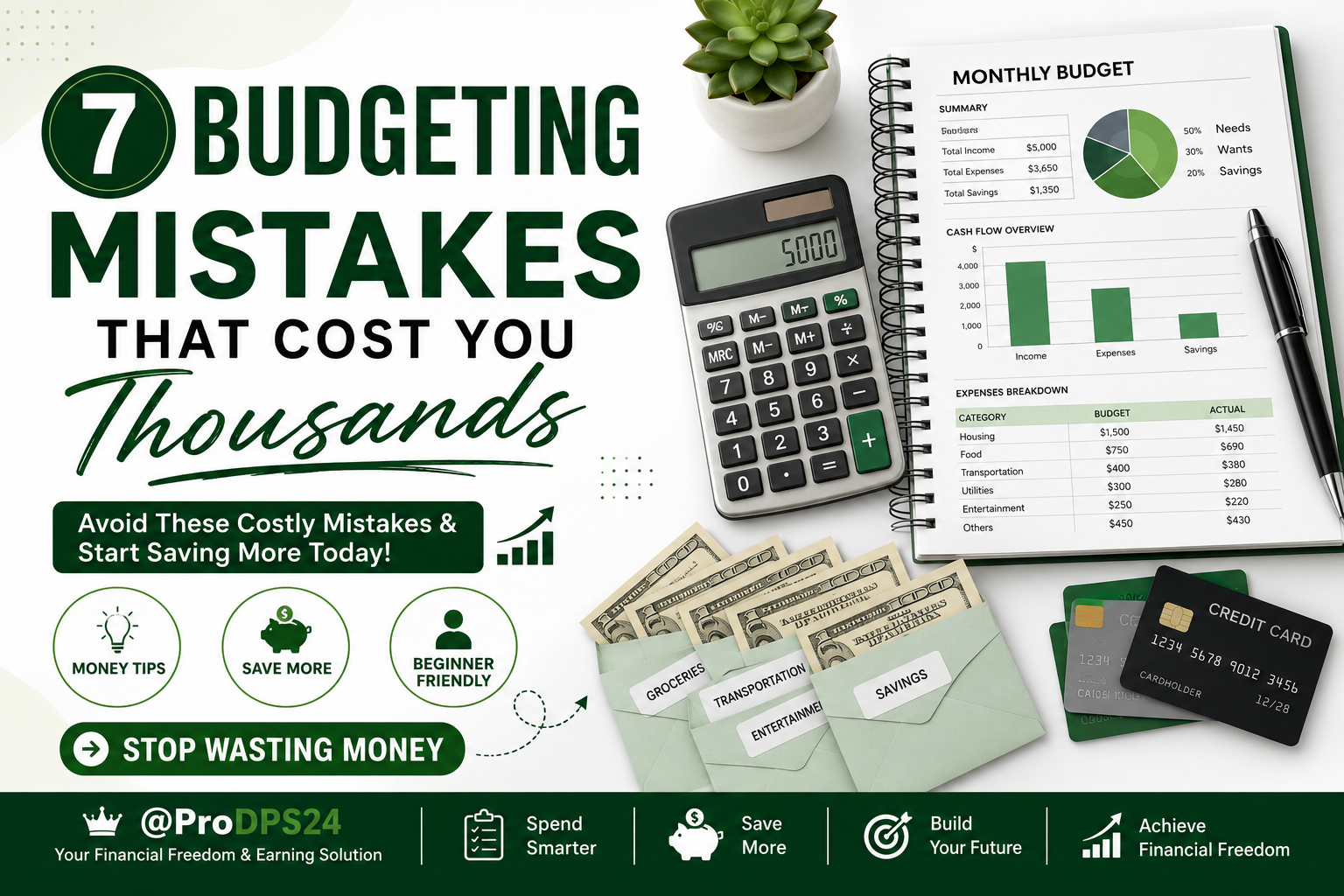
7 Budgeting Mistakes That Cost You Thousands (And How to Avoid Them)
Managing your money doesn’t require a high income—it requires good habits. Many people work hard every month but still struggle to save because of small budgeting mistakes that quietly drain their finances.
The good news is that these mistakes are easy to fix once you recognize them. By making a few simple changes, you can spend more intentionally, save consistently, and move closer to financial freedom.
Let’s explore the seven budgeting mistakes that often cost people thousands of dollars over time.
Why Budgeting Matters
A budget isn’t about limiting your lifestyle. It’s about giving every dollar a purpose before you spend it.
When you know where your money is going, you can:
- Reduce unnecessary spending
- Save for emergencies
- Pay off debt faster
- Reach financial goals sooner
- Feel more confident about your finances
Even small improvements today can make a big difference over the next few years.
1. Not Having a Budget
One of the biggest financial mistakes is simply spending money without a plan.
Without a budget, it’s easy to lose track of where your income goes. Small purchases may seem harmless, but together they can create a large monthly deficit.
How to Fix It
- List all monthly income.
- Write down fixed expenses.
- Estimate variable spending.
- Decide how much you’ll save first.
- Review your budget every month.
2. Spending More Than You Earn
If your expenses regularly exceed your income, debt becomes almost unavoidable.
Living beyond your means often starts with small purchases that don’t seem important at the time.
How to Fix It
- Delay non-essential purchases.
- Compare prices before buying.
- Cut subscriptions you rarely use.
- Increase income with freelance work or side projects.
3. Ignoring Small Daily Expenses
A daily coffee, snack, or impulse online purchase may not seem expensive, but repeated purchases quickly add up.
For example:
| Daily Cost | Monthly | Yearly |
|---|---|---|
| $3 | $90 | $1,095 |
| $5 | $150 | $1,825 |
| $10 | $300 | $3,650 |
Small habits often create the biggest long-term financial impact.
4. Not Saving Consistently
Many people wait until the end of the month to save whatever is left.
Unfortunately, there’s often nothing left.
Instead, treat savings like a monthly bill that must be paid first.
A Simple Rule
Save first.
Spend second.
Even saving just 10% of your income every month builds strong financial discipline over time.
5. Depending Too Much on Credit Cards
Credit cards are useful tools when managed responsibly.
However, carrying balances month after month means paying high interest that reduces your future purchasing power.
Better Habits
- Pay the full balance whenever possible.
- Avoid buying things you can’t currently afford.
- Keep credit utilization low.
- Never rely on credit for everyday living expenses.
6. Forgetting to Track Spending
Many people underestimate how much they actually spend.
Tracking expenses helps identify unnecessary purchases before they become expensive habits.
You can track spending using:
- A notebook
- Spreadsheet
- Budgeting app
- Monthly planner
- Expense tracker template
The method matters less than staying consistent.
7. Having No Financial Goals
Saving money becomes much easier when you know why you’re saving.
Instead of saying:
“I should save more.”
Create specific goals like:
- Build a $1,000 emergency fund.
- Save for a vacation.
- Buy a home.
- Invest for retirement.
- Become debt-free.
Specific goals create motivation and make budgeting feel meaningful.
Monthly Budget Example
| Category | Suggested Percentage |
|---|---|
| Housing | 30% |
| Food | 15% |
| Transportation | 10% |
| Utilities | 10% |
| Savings & Investing | 20% |
| Entertainment | 5% |
| Insurance | 5% |
| Miscellaneous | 5% |
Remember that these percentages are only guidelines. Adjust them according to your personal situation.
Budgeting Habits That Build Wealth
Instead of focusing only on earning more, focus on managing what you already earn.
Successful budgeters usually:
- Review spending every week.
- Save automatically.
- Plan purchases in advance.
- Avoid impulse shopping.
- Compare prices before buying.
- Build an emergency fund.
- Increase savings after every raise.
These habits become more valuable over time.
Common Budgeting Myths
“I don’t earn enough to budget.”
Budgeting is even more important when income is limited because every dollar matters.
“Budgeting is too restrictive.”
A good budget gives you permission to spend—just within limits you’ve chosen.
“I’ll start saving when I make more.”
Financial habits usually matter more than income. Many high earners still struggle because they spend everything they make.
Quick Budgeting Checklist
✓ Know your monthly income.
✓ Track every expense.
✓ Pay yourself first.
✓ Build an emergency fund.
✓ Limit unnecessary subscriptions.
✓ Review your budget monthly.
✓ Set clear financial goals.
Final Thoughts
Building wealth rarely happens overnight. It comes from making smart financial decisions consistently over time.
Avoiding these seven common budgeting mistakes can help you keep more of your income, reduce financial stress, and make steady progress toward your goals.
Remember, the best budget isn’t the most complicated one—it’s the one you can follow every month. Start small, stay consistent, and celebrate each financial milestone along the way. Every smart decision today helps create a stronger financial future tomorrow.
---Advertisement---
[adinserter block="1"]
LATEST post
Swagbucks & InboxDollars $20 Bonus Method – Earning Guide
August 20, 2026
7:59 am

TextNow Account Create Method – Complete Guide for Beginners
August 19, 2026
10:43 pm

SMM Panel কী? Social Media Services ও Marketing Guide 2026
August 18, 2026
9:59 pm

Amazon mTurk Account + Fresh USA VPS Package | ProDPS
August 17, 2026
7:40 am

USA Survey VPS – Best USA VPS for Online Surveys Max Router Supported | ProDPS
August 17, 2026
6:38 am