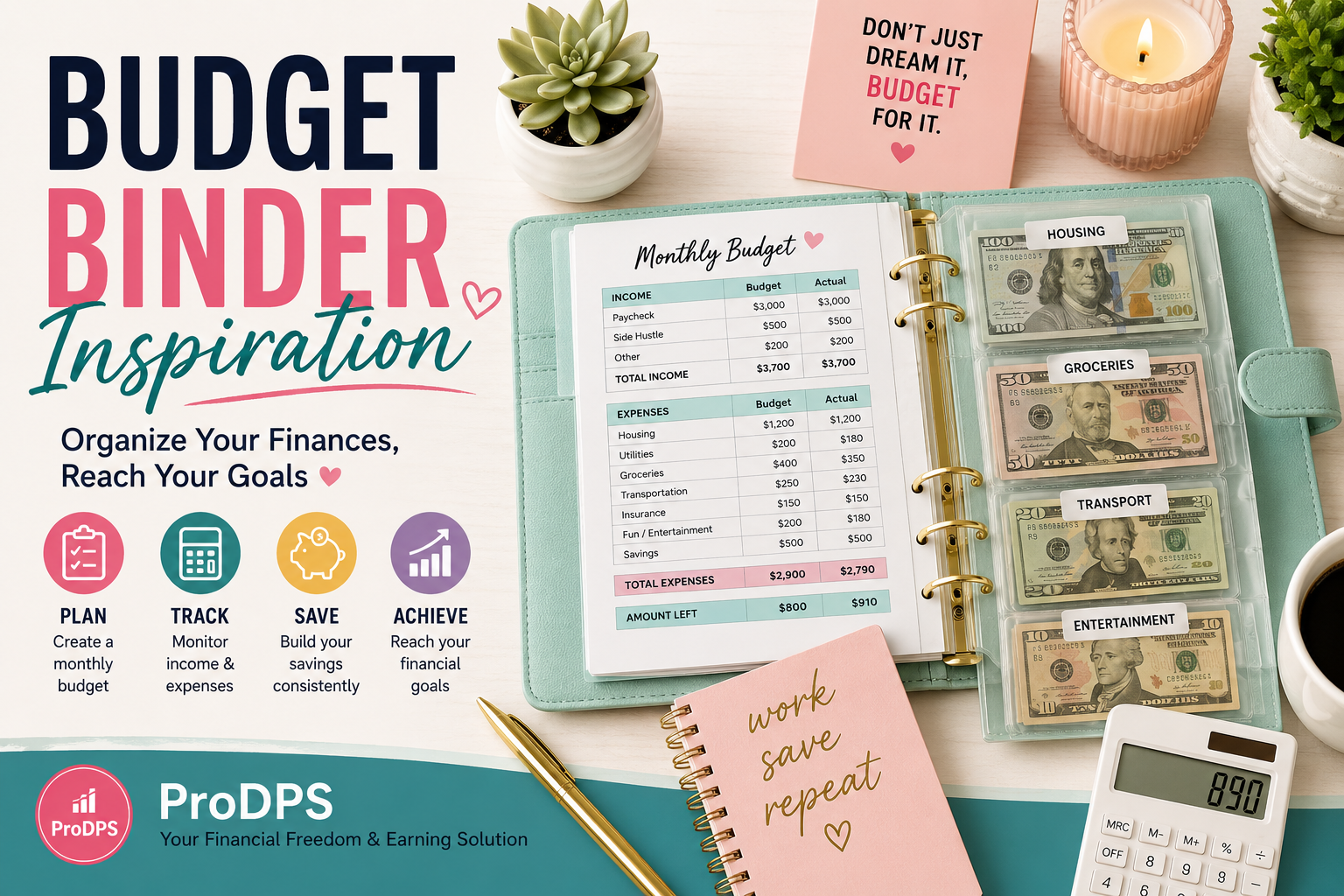
Budget Binder Inspiration: Create a Financial System That Works
Managing money doesn’t have to be stressful. One of the easiest and most effective ways to take control of your finances is by using a budget binder. Whether you’re saving for a vacation, paying off debt, building an emergency fund, or simply trying to spend more intentionally, a well-organized budget binder can help you stay focused on your financial goals.
If you’ve been searching for budget binder inspiration, this guide will show you how to build a practical system that keeps your finances organized throughout the year.
What Is a Budget Binder?
A budget binder is a physical organizer that stores everything related to your personal finances in one place. Instead of keeping bills, receipts, savings plans, and budget worksheets scattered across different folders or drawers, you organize them into one convenient binder.
A budget binder makes it easier to:
- Track monthly income
- Monitor expenses
- Create spending limits
- Save for future goals
- Keep important financial documents organized
- Review your progress every month
The biggest advantage is having a complete picture of your financial life whenever you need it.
Why Budget Binders Are So Popular
Many people find budgeting apps helpful, but others enjoy the simplicity of writing everything down.
Using a physical budget binder offers several benefits:
- Better awareness of spending habits
- Reduced impulse purchases
- Easier monthly planning
- Greater motivation to save money
- Improved financial discipline
- Less financial stress
Writing your budget by hand also encourages you to think carefully about every financial decision.
Essential Budget Binder Sections
A complete budget binder can include several useful sections.
Monthly Budget Planner
Plan your expected income and expenses before each month begins.
Include categories such as:
- Housing
- Utilities
- Groceries
- Transportation
- Insurance
- Entertainment
- Savings
- Debt payments
Expense Tracker
Record daily purchases to understand exactly where your money goes.
Tracking expenses consistently helps identify unnecessary spending.
Savings Goals
Create dedicated pages for goals such as:
- Emergency fund
- Vacation savings
- New car
- Home down payment
- Holiday gifts
- Education
Watching your savings grow provides powerful motivation.
Cash Envelope Tracker
If you use the cash envelope budgeting method, organize envelopes for categories like:
- Groceries
- Dining Out
- Gas
- Shopping
- Entertainment
This helps prevent overspending in each category.
Bill Payment Calendar
Keep a monthly calendar that lists:
- Due dates
- Payment amounts
- Payment status
Missing fewer due dates can also help maintain a healthier financial routine.
Debt Payoff Tracker
Track balances for:
- Credit cards
- Personal loans
- Student loans
- Auto loans
Seeing progress toward becoming debt-free can be incredibly motivating.
Supplies You’ll Need
Creating a budget binder doesn’t require expensive materials.
You’ll typically need:
- A durable three-ring binder
- Dividers
- Plastic document sleeves
- Budget worksheets
- Monthly calendars
- Pens or highlighters
- Cash envelopes (optional)
- Sticky notes
Choose supplies that make budgeting enjoyable and easy to maintain.
Tips for Keeping Your Budget Binder Organized
To get the most from your binder:
- Update it every week.
- Review your budget at the end of each month.
- Keep receipts until you’ve recorded expenses.
- Adjust spending categories as your needs change.
- Celebrate small financial milestones to stay motivated.
Consistency is more important than perfection.
Common Budget Binder Mistakes to Avoid
Many beginners make similar mistakes.
Avoid these common problems:
- Forgetting to track small purchases
- Creating unrealistic spending limits
- Ignoring irregular expenses
- Not reviewing the budget monthly
- Giving up after one mistake
Remember, budgeting is about progress—not perfection.
Who Should Use a Budget Binder?
A budget binder works well for:
- Students
- Families
- Freelancers
- Small business owners
- Couples
- Anyone working toward financial freedom
No matter your income level, having a clear financial plan can help you make smarter money decisions.
Final Thoughts
A budget binder is more than just a collection of worksheets—it’s a practical tool that helps you develop better financial habits. By organizing your income, expenses, savings, and goals in one place, you can gain confidence, reduce financial stress, and make steady progress toward long-term financial success.
Start with a simple setup, stay consistent, and improve your system over time. Small financial habits practiced regularly often lead to meaningful results.
If you’re looking for more budgeting ideas, printable planners, and personal finance inspiration, explore more helpful resources here on ProdPS.com. Every step you take today can help build a stronger financial future.
Frequently Asked Questions (FAQ)
Is a budget binder better than a budgeting app?
Both can be effective. A budget binder is ideal for people who enjoy writing things down and prefer a hands-on approach, while budgeting apps provide automatic tracking and digital convenience.
How often should I update my budget binder?
Updating it weekly is recommended, with a more detailed review at the end of each month.
Can beginners use a budget binder?
Absolutely. A simple binder with a monthly budget sheet and expense tracker is enough to get started.
Do I need cash envelopes?
No. Cash envelopes are optional but can be helpful if you want to control spending in specific categories.