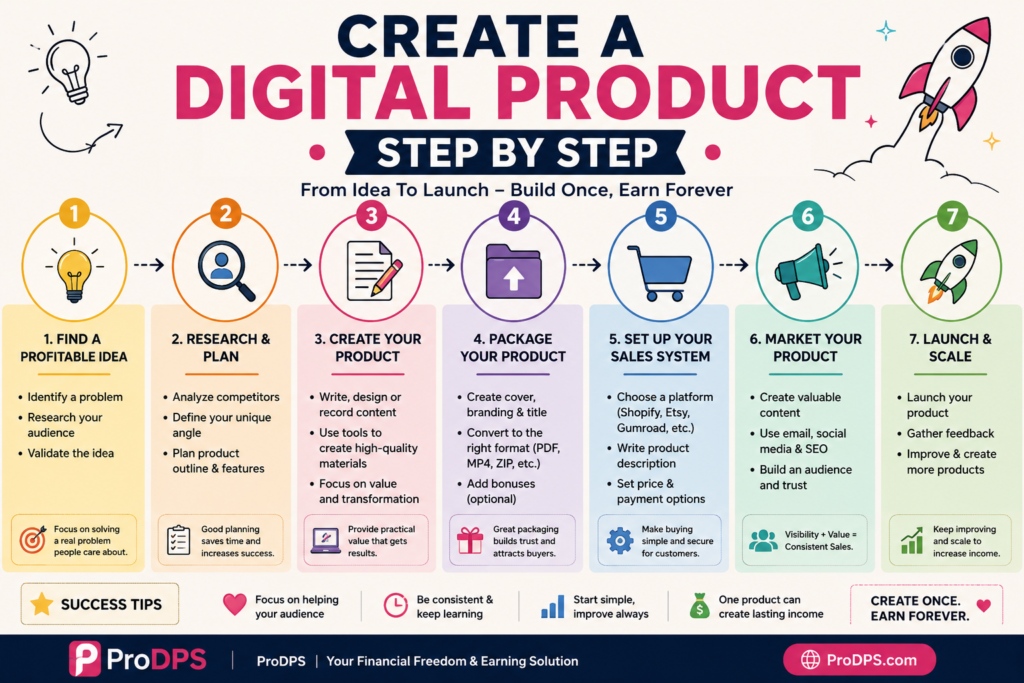
Create A Digital Product Step By Step
Digital products have become one of the most popular ways to earn money online. Unlike physical products, they don’t require inventory, shipping, or storage. Once created, they can be sold repeatedly to customers worldwide, making them an attractive option for entrepreneurs, freelancers, creators, and small business owners.
Whether you’re planning to sell an ebook, printable planner, online course, design template, spreadsheet, digital artwork, or business toolkit, following a structured workflow can save time and improve your chances of success.
This guide explains each stage of creating a digital product—from idea generation to launch—so you can build a product that provides real value to your audience.
Why Choose Digital Products?
Digital products offer several advantages:
- Low startup costs
- Unlimited sales potential
- No shipping or inventory
- Automated delivery
- High profit margins
- Flexible work schedule
- Global customer reach
Because customers receive instant access after purchase, digital products are also highly convenient and scalable.
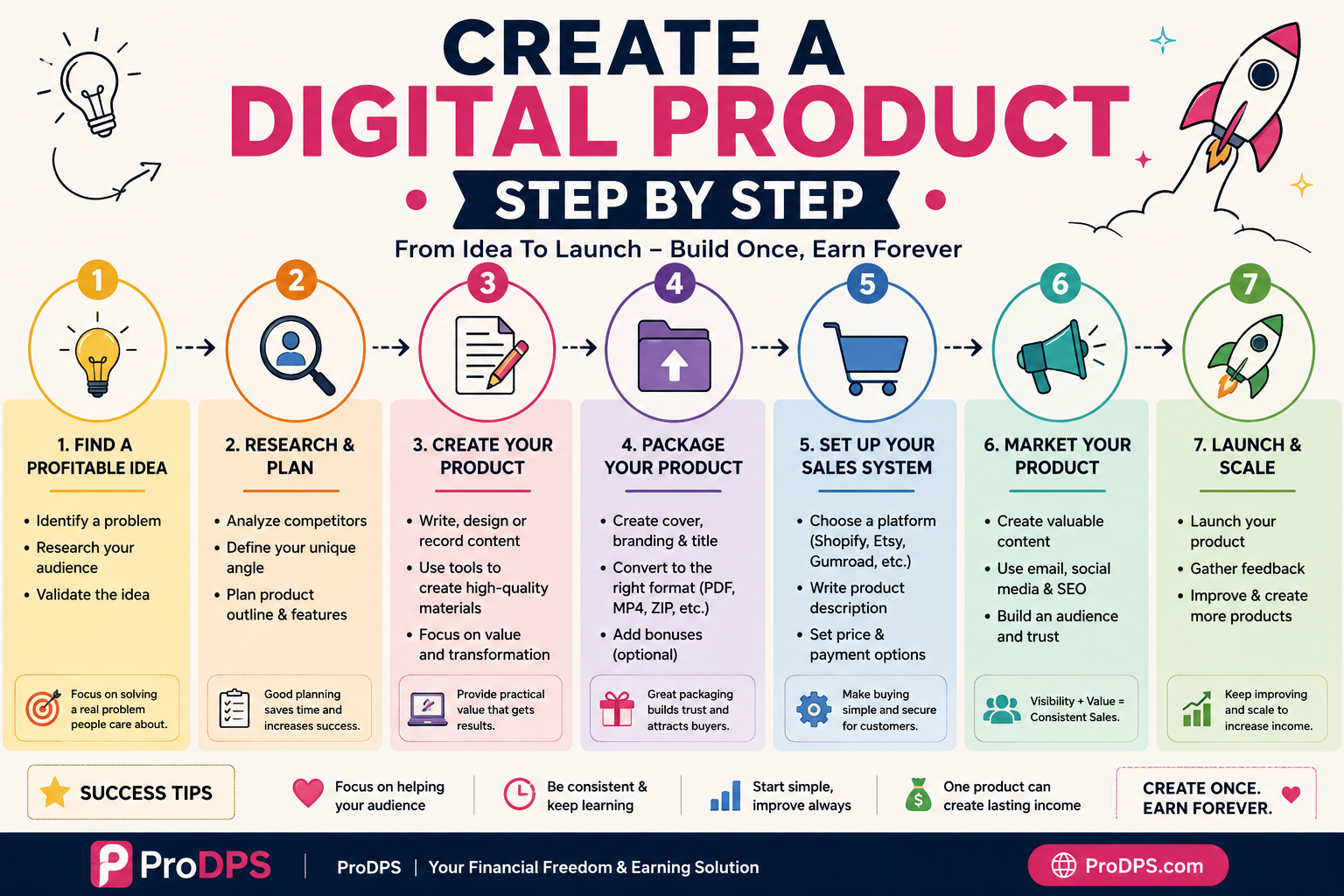
Step 1: Find a Profitable Idea
Every successful product begins by solving a real problem.
Instead of creating something you personally like, focus on what your target audience actually needs.
Ask yourself:
- What questions do people frequently ask?
- Which tasks consume their time?
- What skills can you teach?
- Which problems can your product solve?
Research online communities, forums, search trends, and customer feedback to validate your idea before investing time in creating it.
Step 2: Research and Plan
After choosing an idea, spend time planning.
Identify:
- Your ideal customer
- Competitors
- Market demand
- Product features
- Customer expectations
Create a simple outline describing exactly what your product will include.
Good planning reduces mistakes later and helps produce a more valuable final product.
Step 3: Create Your Digital Product
Now it’s time to build your product.
Depending on your niche, you may create:
- eBooks
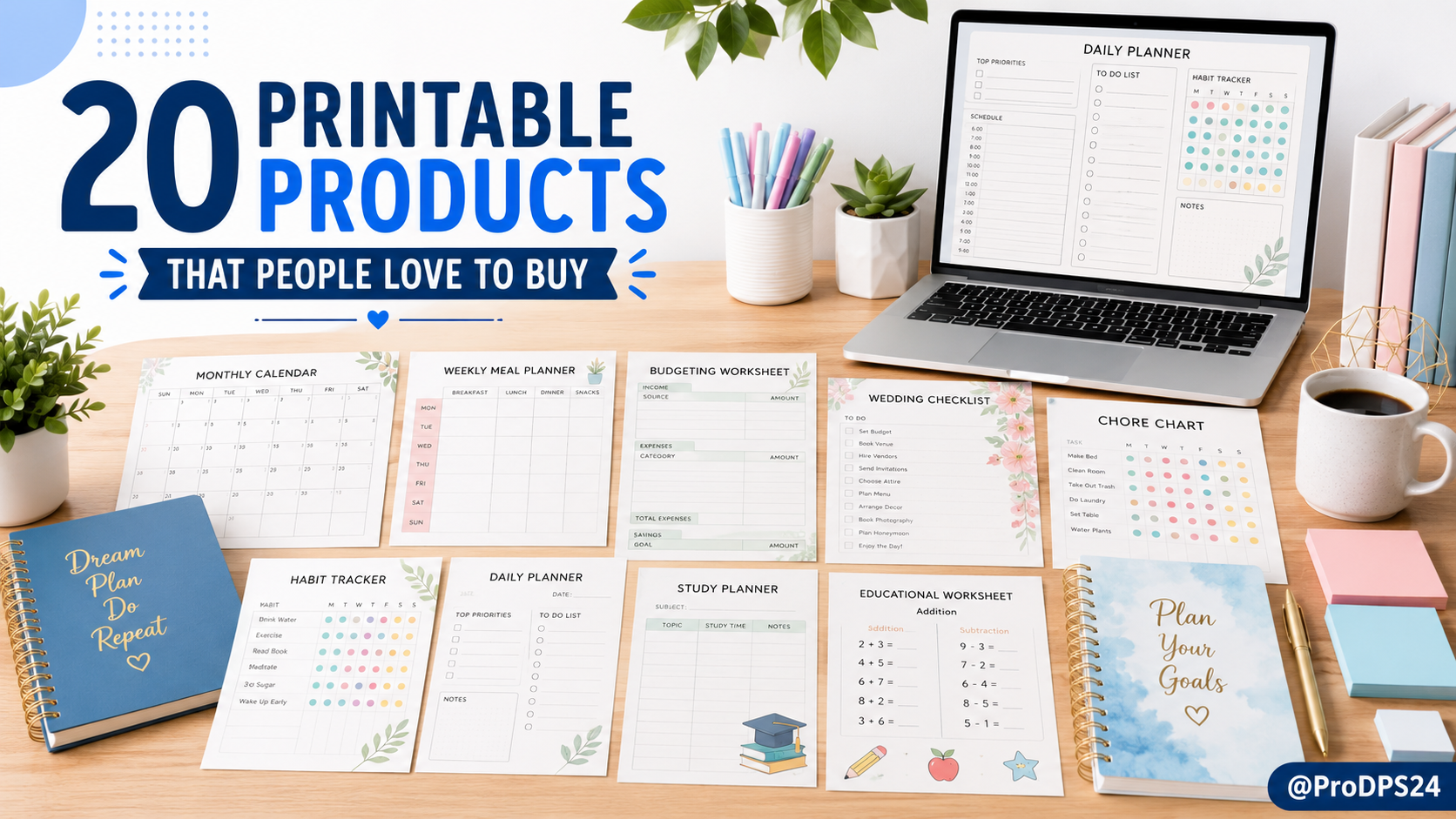
- Printable planners
- Notion templates
- Canva templates
- Excel spreadsheets
- Digital planners
- Online courses
- Business documents
- Checklists
- Design assets
Focus on providing practical value rather than adding unnecessary complexity.
A simple product that solves one specific problem often performs better than a large product covering too many topics.
Step 4: Package Your Product Professionally
Presentation matters.
Create:
- Professional cover image
- Attractive thumbnails
- Clear product description
- Easy-to-follow instructions
- Organized file structure
Export files in appropriate formats such as:
- ZIP
- PNG
- JPG
- MP4
- DOCX
Professional packaging increases customer confidence and improves conversion rates.
Step 5: Set Up Your Sales System
Choose where customers will purchase your product.
Examples include:
- Your own website
- WooCommerce store
- Digital marketplaces
- Creator platforms
Include:
- Product images
- Benefits
- Features
- FAQs
- Refund policy
- Pricing
- Secure checkout
A clean purchasing experience encourages more sales.
Step 6: Market Your Product
Creating a great product is only half the journey.
You also need consistent marketing.
Effective methods include:
- Blog articles
- Email newsletters
- Search Engine Optimization (SEO)
- Social media
- YouTube tutorials
- Free lead magnets
Publishing helpful content regularly builds trust and attracts potential customers over time.
Step 7: Launch and Improve
Your first version doesn’t have to be perfect.
Launch your product, gather customer feedback, and continue improving.
Successful creators regularly:
- Update products
- Fix issues
- Add bonuses
- Improve design
- Expand features
Continuous improvement helps maintain customer satisfaction and increases long-term sales.
Best Practices for Success
Keep these tips in mind while building your digital product business:
- Solve one clear problem.
- Focus on quality over quantity.
- Keep your branding consistent.
- Write customer-focused product descriptions.
- Use SEO-friendly titles.
- Collect customer reviews.
- Build an email list.
- Continue publishing helpful content.
Small improvements over time often lead to significant business growth.
Final Thoughts
Creating a digital product may seem challenging at first, but breaking the process into manageable steps makes it much easier. By researching your audience, planning carefully, creating valuable content, packaging it professionally, and promoting it consistently, you can build a digital product business that continues generating income long after the initial work is complete.
Success rarely happens overnight, but every product you create improves your experience, expands your portfolio, and opens new opportunities for growth. Start with one well-crafted product, listen to customer feedback, and keep refining your process. Over time, these consistent efforts can become the foundation of a sustainable online business.