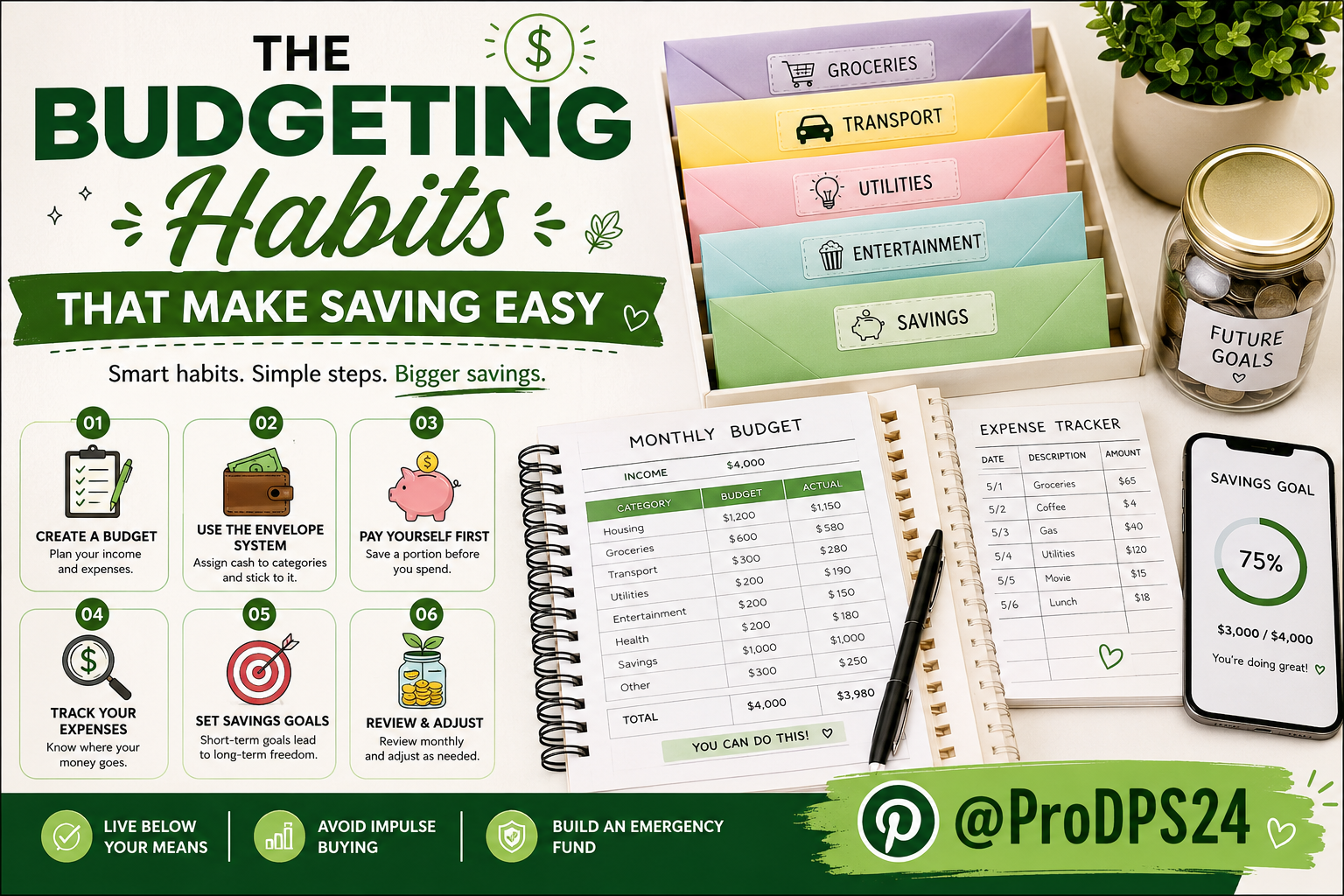
The Budgeting Habits That Make Saving Easy: 10 Simple Money Habits for Financial Success
WhatsApp
Telegram
Facebook
Twitter
LinkedIn
Join Our WhatsApp Channel
Saving money doesn’t have to feel difficult. Many people believe they need a higher income before they can build savings, but the truth is that good budgeting habits often matter more than earning more money.
Small, consistent financial habits can make a huge difference over time. Whether you’re trying to pay off debt, build an emergency fund, save for a vacation, or simply gain more control over your finances, creating a realistic budget is one of the smartest steps you can take.
In this guide, you’ll discover practical budgeting habits that are easy to follow and can help you save more money every month without feeling overwhelmed.
Why Budgeting Matters
A budget isn’t about restricting your spending—it’s about telling your money where to go instead of wondering where it went.
A well-planned budget helps you:
- Reduce financial stress
- Control unnecessary spending
- Reach savings goals faster
- Prepare for emergencies
- Avoid unnecessary debt
- Build long-term financial security
Even simple budgeting habits can create lasting financial improvements.
1. Create a Monthly Budget
Every successful financial plan starts with a monthly budget.
Write down:
- Monthly income
- Fixed expenses
- Variable expenses
- Savings goals
- Debt payments
Knowing exactly how much money comes in and goes out each month makes it much easier to make smart financial decisions.
Tip: Review your budget before each new month instead of waiting until you’re already overspending.
2. Pay Yourself First
One of the best budgeting habits is treating savings like a monthly bill.
Instead of saving whatever money is left at the end of the month, save first.
For example:
- Save 10%
- Save 15%
- Save a fixed amount every payday
Even small amounts add up over time through consistency.
3. Track Every Expense
Many people underestimate how much they spend on small daily purchases.
Track expenses like:
- Coffee
- Snacks
- Streaming subscriptions
- Online shopping
- Food delivery
- Convenience purchases
Recording your spending helps identify habits that quietly reduce your savings.
4. Use the Envelope Budget System
The cash envelope system is one of the simplest budgeting methods.
Create separate envelopes for categories such as:
- Groceries
- Transportation
- Entertainment
- Dining Out
- Household Expenses
Once an envelope is empty, stop spending in that category until the next budgeting period.
This method naturally reduces impulse purchases.
5. Set Realistic Savings Goals
Saving becomes easier when you know exactly what you’re working toward.
Examples include:
- $500 emergency fund
- New laptop
- Holiday travel
- Home down payment
- Retirement savings
- Paying off student loans
Break large goals into smaller monthly targets to stay motivated.
6. Separate Needs From Wants
Before buying something, ask yourself:
- Do I actually need this?
- Can it wait until next month?
- Is there a cheaper alternative?
Learning the difference between needs and wants is one of the most powerful money-saving habits.
7. Review Your Budget Every Week
Budgets aren’t meant to sit untouched.
Spend just 10–15 minutes each week reviewing:
- Current spending
- Remaining budget
- Savings progress
- Upcoming bills
Weekly reviews help catch problems before they become expensive mistakes.
8. Build an Emergency Fund
Unexpected expenses happen.
Car repairs, medical bills, home maintenance, or job changes can quickly create financial stress.
Aim to save:
- First Goal: $500
- Next Goal: $1,000
- Long-Term Goal: 3–6 months of living expenses
An emergency fund protects your budget from unexpected setbacks.
9. Avoid Impulse Purchases
Impulse buying is one of the biggest obstacles to saving money.
Try the 24-hour rule.
If you want to buy something that’s not essential, wait at least one day before making the purchase.
You’ll often realize you don’t actually need it.
10. Automate Your Savings
Automation removes the temptation to spend money that should be saved.
You can:
- Schedule automatic bank transfers
- Set recurring savings deposits
- Round up purchases into savings
- Automatically contribute to retirement accounts
Consistency is more important than the amount you save.
Common Budgeting Mistakes to Avoid
Many people struggle with budgeting because of a few common mistakes:
- Not tracking expenses
- Forgetting annual bills
- Setting unrealistic budgets
- Ignoring small purchases
- Using credit cards for unnecessary spending
- Not reviewing the budget regularly
Avoiding these mistakes can dramatically improve your financial progress.
Easy Money-Saving Habits You Can Start Today
Simple daily habits can have a big impact over time.
Try these ideas:
- Cook meals at home more often.
- Cancel subscriptions you don’t use.
- Compare prices before shopping.
- Use a shopping list.
- Save spare change.
- Buy only what you planned.
- Wait before making large purchases.
- Set weekly spending limits.
Small changes often produce the biggest long-term results.
Benefits of Good Budgeting Habits
When you consistently follow a budget, you’ll likely notice:
- More money saved every month
- Less financial stress
- Better spending decisions
- Improved financial confidence
- Faster progress toward goals
- Greater peace of mind
Budgeting isn’t about perfection—it’s about making steady progress.
Frequently Asked Questions
What is the best budgeting method?
There is no one-size-fits-all approach. Popular methods include the 50/30/20 budget, zero-based budgeting, and the cash envelope system. Choose the method that fits your lifestyle and financial goals.
How much should I save each month?
Many financial experts recommend saving at least 20% of your income when possible. If that’s not realistic, start with a smaller amount and increase it gradually.
Is budgeting difficult?
Not at all. A simple budget with consistent tracking is often more effective than a complicated system that’s hard to maintain.
Can budgeting help reduce debt?
Yes. Budgeting helps you control spending, prioritize debt payments, and free up money that can be used to pay down balances faster.
Final Thoughts
Building better budgeting habits doesn’t require a huge income or complicated financial tools. What matters most is consistency. By creating a realistic budget, tracking your expenses, setting clear savings goals, and reviewing your progress regularly, you can take control of your finances and make saving money a natural part of your everyday life.
Remember, every dollar you save today brings you one step closer to greater financial freedom tomorrow. Start with one habit, stay consistent, and let small improvements grow into lasting financial success.
---Advertisement---
[adinserter block="1"]
LATEST post
The Budgeting Habits That Make Saving Easy: 10 Simple Money Habits for Financial Success
July 11, 2026
4:03 am

20 Best Printable Products to Sell Online (High-Demand Ideas for 2026)
July 10, 2026
5:49 am

15 Best Free AI Websites You Should Bookmark in 2026
July 10, 2026
5:27 am

18 Side Hustles That Require Almost No Money (Beginner Guide)
July 9, 2026
5:08 pm

Money Mistakes That Keep People Broke (And How to Avoid Them)
July 9, 2026
4:28 pm