Roadmap to Financial Freedom: Your Step-by-Step Guide to Building Wealth
Financial freedom is more than having a large bank account—it’s about having the ability to make life decisions without constantly worrying about money. Whether your goal is retiring early, traveling the world, buying your dream home, or simply living stress-free, every financial journey begins with a clear roadmap.
The good news is that you don’t need to be wealthy to start. With consistency, smart planning, and good financial habits, anyone can work toward long-term financial independence.
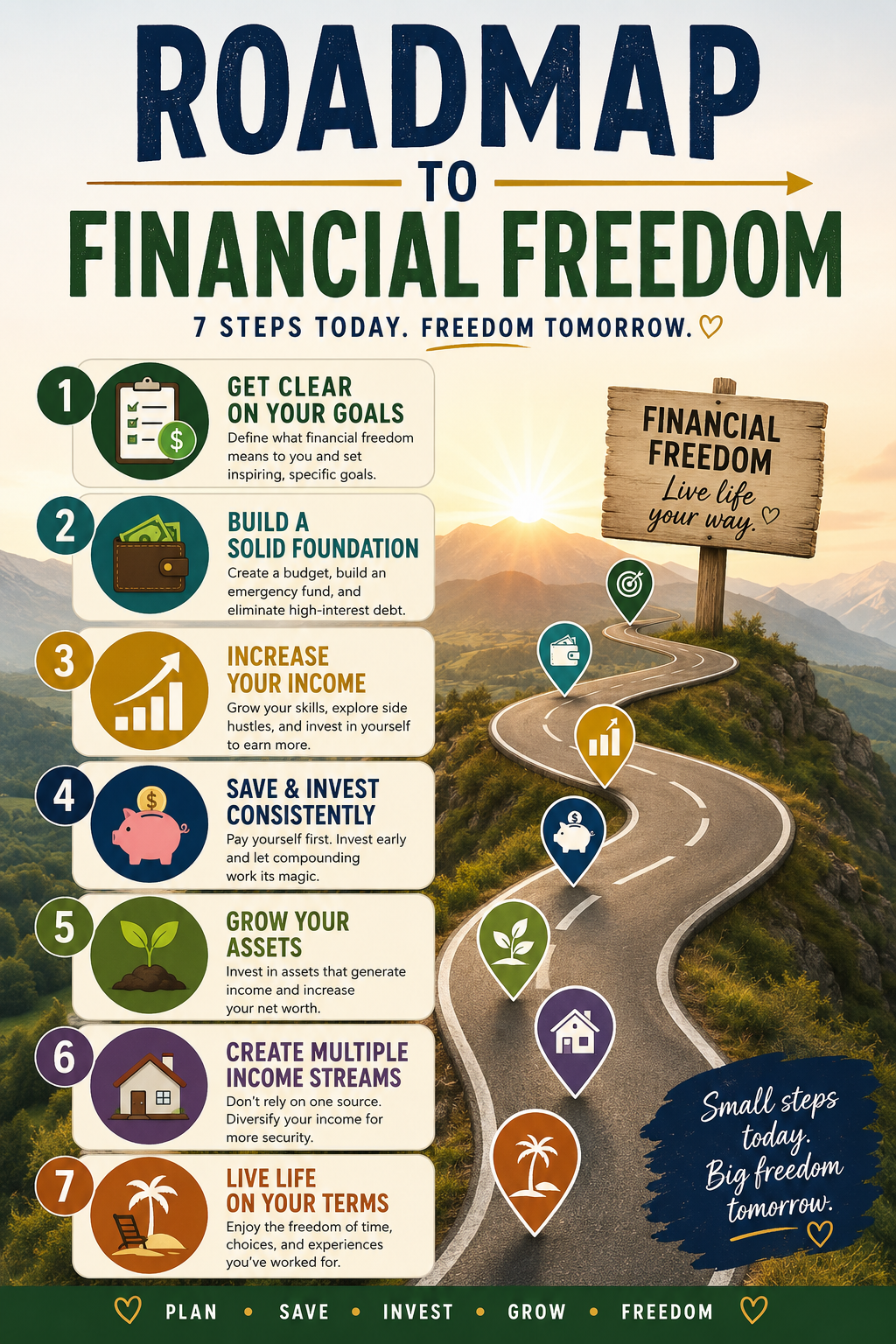
In this guide, we’ll explore seven practical milestones that can help you build a stronger financial future.
What Is Financial Freedom?
Financial freedom means having enough income, savings, and investments to comfortably support your lifestyle without relying entirely on a traditional paycheck. It provides flexibility, security, and peace of mind.
Achieving financial freedom isn’t about becoming rich overnight. Instead, it’s about making smart financial decisions consistently over time.
Step 1: Define Clear Financial Goals
Every successful financial plan starts with a destination.
Ask yourself:
- How much money do I want to save?
- When do I want to retire?
- Do I want to own a home?
- Do I want passive income?
Write down both short-term and long-term goals.
Examples
- Save $5,000 emergency fund
- Pay off credit card debt
- Buy a home
- Build a six-figure investment portfolio
- Retire early
Clear goals help keep you motivated and focused.
Step 2: Build a Strong Financial Foundation
A solid foundation protects your future.
Start by:
- Creating a monthly budget
- Tracking your spending
- Building an emergency fund
- Paying bills on time
- Eliminating unnecessary expenses
Aim to save three to six months of living expenses for emergencies.
This safety net helps you avoid debt when unexpected expenses arise.
Step 3: Increase Your Income
Saving alone has limits.
Growing your income can dramatically accelerate your financial progress.
Consider:
- Learning high-income skills
- Freelancing online
- Starting a side hustle
- Selling digital products
- Offering consulting services
- Asking for a promotion
- Starting an online business
The more income you generate, the more opportunities you’ll have to save and invest.
Step 4: Save and Invest Consistently
Saving protects your money.
Investing helps your money grow.
Instead of waiting until you have a large amount to invest, begin with whatever you can afford.
Popular investment options include:
- Index funds
- ETFs
- Retirement accounts
- Dividend stocks
- Real estate
- High-yield savings accounts
Consistency is often more important than investing large amounts.
Small investments made regularly can grow significantly through compound returns.
Step 5: Grow Your Assets
Assets generate value over time.
Focus on acquiring things that appreciate or produce income.
Examples include:
- Investment portfolios
- Rental properties
- Digital businesses
- Intellectual property
- Online stores
- Dividend-paying investments
The goal is to own assets that continue working for you even while you sleep.
Step 6: Build Multiple Income Streams
Depending on one source of income increases financial risk.
Diversifying your earnings creates greater stability.
Common income streams include:
- Full-time employment
- Freelancing
- Dividend income
- Rental income
- Digital product sales
- Affiliate marketing
- Online courses
- Printables and templates
- Blogging
- YouTube content creation
Multiple income streams make financial setbacks easier to manage.
Step 7: Enjoy Financial Independence
Financial freedom isn’t just about money.
It’s about having choices.
When you reach financial independence, you gain the flexibility to:
- Spend more time with family
- Travel without financial stress
- Pursue hobbies
- Start passion projects
- Retire comfortably
- Support causes you care about
The journey may take years, but every positive financial decision moves you closer to your goal.
Common Mistakes to Avoid
Many people delay financial success by making avoidable mistakes.
Watch out for:
- Living beyond your means
- Ignoring your budget
- Carrying high-interest debt
- Delaying investing
- Not having an emergency fund
- Depending on a single income source
- Making emotional financial decisions
Learning from these mistakes can save thousands of dollars over time.
Simple Habits That Build Wealth
Success comes from daily habits.
Try to:
- Save before spending
- Review your finances every month
- Invest consistently
- Read personal finance books
- Increase your skills
- Avoid impulse purchases
- Set yearly financial goals
Small improvements repeated consistently often produce the biggest long-term results.
Final Thoughts
Financial freedom isn’t reserved for a lucky few. It’s achievable for anyone willing to develop healthy money habits, remain consistent, and think long-term.
Whether you’re just starting your financial journey or looking to improve your current strategy, remember that progress is built one step at a time.
Start today, stay committed, and let every financial decision bring you closer to the life you truly want.
At ProDPS, we’re committed to sharing practical personal finance tips, digital tools, and money-saving strategies to help you make smarter financial decisions and build a brighter future.
Frequently Asked Questions
How long does it take to achieve financial freedom?
The timeline varies depending on your income, expenses, savings rate, investments, and financial goals. Consistency and disciplined money management can significantly speed up the process.
Can I start with a low income?
Yes. Financial freedom begins with good habits, not a high salary. Budgeting, saving regularly, reducing debt, and increasing your skills can all help you progress regardless of your starting income.
Why is investing important?
Investing allows your money to grow over time through compounding, helping you build wealth faster than saving alone.