Introduction
Have you ever been surprised by an expensive car repair, a holiday shopping bill, or an annual insurance payment? These expenses aren’t emergencies because you know they’re coming—but they can still disrupt your monthly budget if you aren’t prepared.
That’s where sinking funds become one of the most effective personal finance strategies.
A sinking fund is a simple savings method that helps you prepare for future expenses by setting aside a small amount of money every month. Instead of relying on credit cards or emergency savings, you gradually build dedicated savings for specific goals.
Whether you’re new to budgeting or looking for a better way to manage your money, this guide explains everything you need to know about sinking funds and how they can help you achieve greater financial stability.
What Is a Sinking Fund?
A sinking fund is money that you regularly save for a planned future expense.
Rather than waiting until the expense arrives, you contribute small amounts over time until you’ve saved enough.
For example:
- Holiday gifts
- Car maintenance
- Home repairs
- Vacation
- School expenses
- Insurance premiums
- Technology upgrades
- Medical expenses
- Pet care
- Annual subscriptions
The goal is simple:
Save before you spend.
How Does a Sinking Fund Work?
Let’s say you want to take a vacation next year that will cost approximately $1,200.
Instead of trying to find $1,200 all at once, you save:
$100 every month × 12 months = $1,200
When vacation time arrives, the money is already waiting for you.
No debt.
No financial stress.
No unexpected budget problems.
Sinking Funds vs Emergency Funds
Many people confuse these two savings strategies.
A sinking fund is for expected expenses.
Examples include:
- Christmas shopping
- New tires
- Property taxes
- Annual insurance
- Birthday gifts
An emergency fund is for unexpected financial emergencies.
Examples include:
- Job loss
- Medical emergencies
- Emergency home damage
- Major unexpected expenses
Ideally, every healthy financial plan includes both.
Benefits of Using Sinking Funds
1. Reduces Financial Stress
Knowing that money is already saved makes large expenses much easier to handle.
2. Helps You Avoid Debt
Instead of using credit cards or loans, you’re spending money you’ve already saved.
3. Makes Budgeting Easier
Monthly expenses become much more predictable.
4. Encourages Better Saving Habits
Small monthly contributions are easier than trying to save large amounts at once.
5. Protects Your Emergency Fund
You won’t need to dip into emergency savings for expected expenses.
Popular Sinking Fund Categories
Here are some of the most common sinking funds people use:
Travel Fund
Save gradually for vacations and weekend trips.
Car Maintenance
Oil changes, new tires, repairs, registration, and inspections.
Home Maintenance
Painting, plumbing, appliances, furniture, and repairs.
Holidays & Gifts
Christmas, birthdays, anniversaries, and special occasions.
Education
Books, tuition, online courses, and certifications.
Medical Expenses
Dental work, glasses, prescriptions, and routine healthcare costs.
Electronics
Phones, laptops, tablets, and accessories.
Annual Bills
Insurance, memberships, subscriptions, and taxes.
How to Start a Sinking Fund
Step 1: List Future Expenses
Write down every predictable expense during the next 12 months.
Step 2: Estimate the Cost
Determine approximately how much each expense will cost.
Step 3: Set a Deadline
Choose when you’ll need the money.
Step 4: Divide the Total
Example:
Vacation = $1,200
Need it in 12 months
Monthly Savings = $100
Step 5: Save Automatically
Set up automatic transfers to make saving effortless.
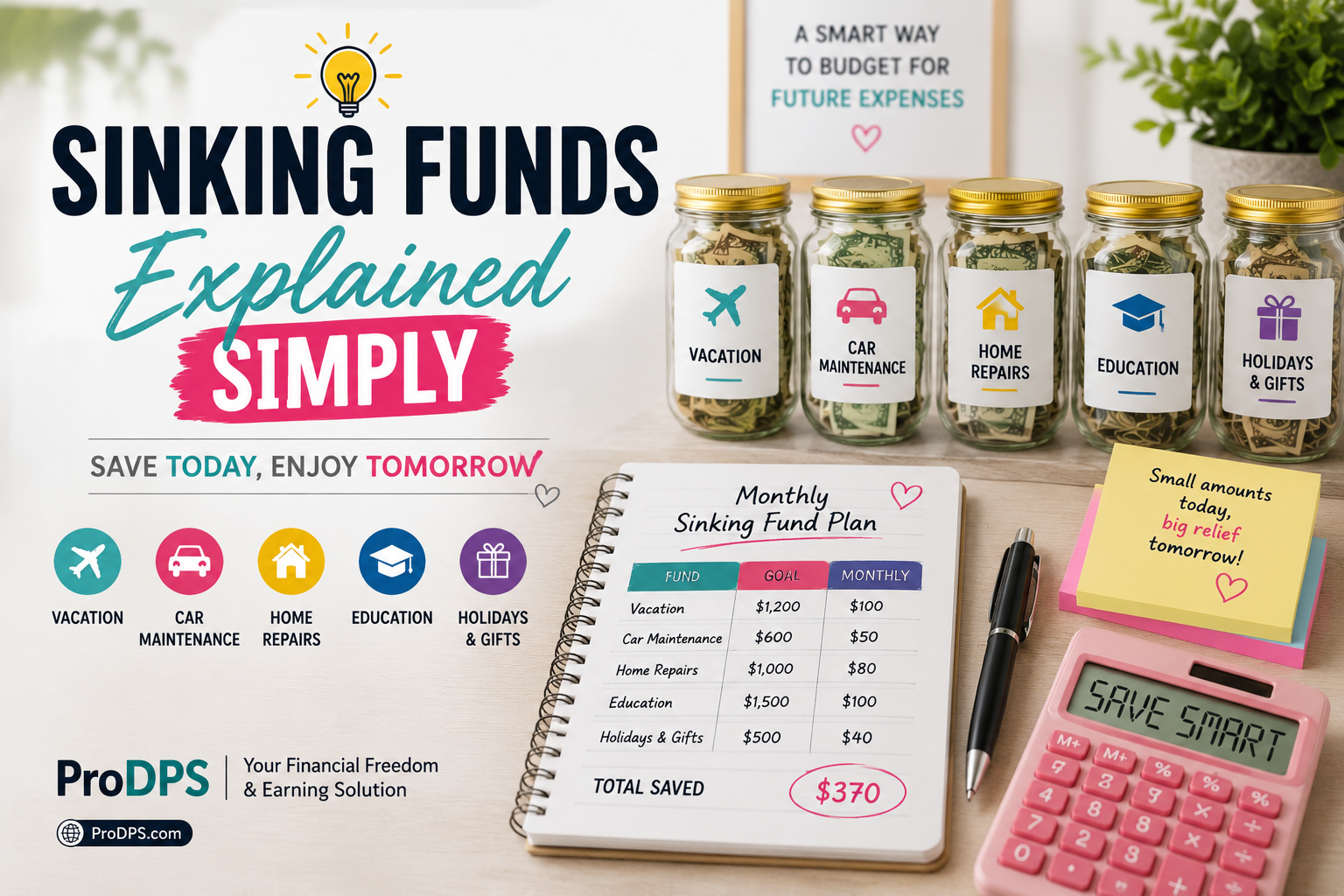
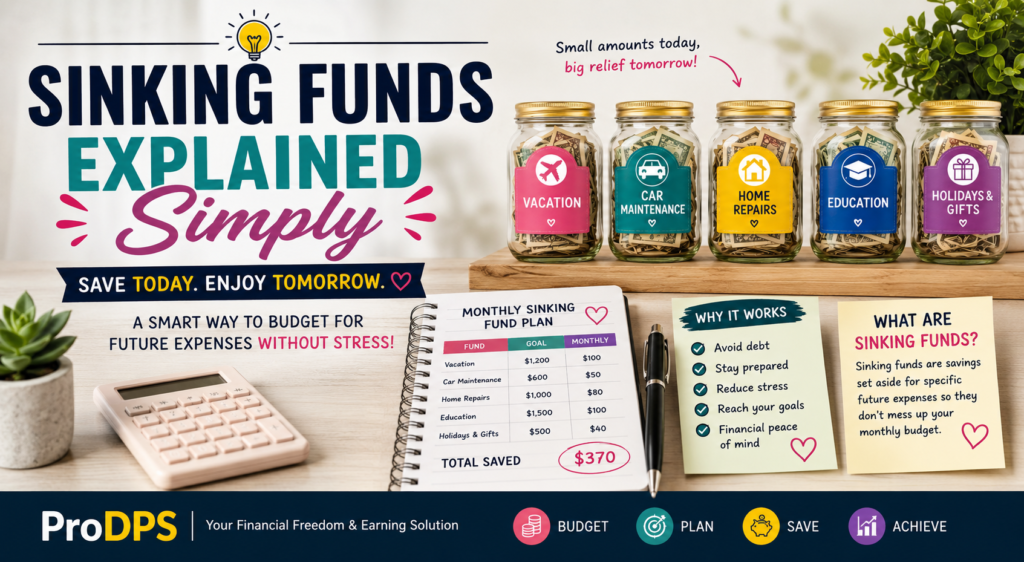
Example Monthly Sinking Fund Plan
| Category | Goal | Monthly Savings |
|---|---|---|
| Vacation | $1,200 | $100 |
| Car Maintenance | $600 | $50 |
| Home Repairs | $960 | $80 |
| Holiday Gifts | $480 | $40 |
| Education | $720 | $60 |
Total Monthly Savings: $330
Best Tips for Successful Sinking Funds
- Start with only two or three funds.
- Keep separate savings accounts if possible.
- Review your goals every few months.
- Increase contributions when your income grows.
- Use budgeting apps or spreadsheets to track progress.
- Stay consistent, even if you can only save a small amount.
Common Mistakes to Avoid
❌ Saving without a clear goal
❌ Forgetting annual expenses
❌ Spending sinking fund money on unrelated purchases
❌ Trying to save for too many categories at once
❌ Not reviewing your budget regularly
Digital Tools That Can Help
Many people track sinking funds using:
- Budget spreadsheets
- Digital planners
- Expense tracking apps
- Banking savings buckets
- Personal finance templates
Choose a method that is simple enough to maintain consistently.
Frequently Asked Questions
How many sinking funds should I have?
Start with two or three important categories and add more as your budget improves.
Can I have multiple sinking funds?
Absolutely. Many households maintain separate funds for vacations, home repairs, gifts, insurance, and car maintenance.
Is a sinking fund the same as an emergency fund?
No. Emergency funds cover unexpected events, while sinking funds prepare for planned expenses.
Where should I keep my sinking funds?
A separate savings account or dedicated budgeting app works well. Some banks also offer savings buckets for different goals.
Final Thoughts
Building wealth isn’t only about earning more money—it’s also about preparing for future expenses wisely.
Sinking funds make budgeting easier, reduce financial stress, and help you avoid unnecessary debt. By saving a little each month, you’ll be ready when life’s expected expenses arrive.
No matter your income level, starting even one sinking fund today can create better financial habits and greater peace of mind tomorrow.
Small monthly savings lead to big financial confidence over time.
Explore more practical budgeting, saving, passive income, and productivity guides on ProDPS.com to continue improving your financial future.